Kimmich challenges Bayern’s public handling of Musiala
Joshua Kimmich has challenged Bayern Munich’s public handling of Jamal Musiala, arguing that the club’s treatment of the midfielder falls short of the family values it says it represents. His intervention shifts attention from Musiala’s performances to the way a major club talks about a player whose health and form are both under scrutiny. The distinction matters: criticism of a player’s contribution is part of football, while discussion of a medical condition raises different questions about care and responsibility.
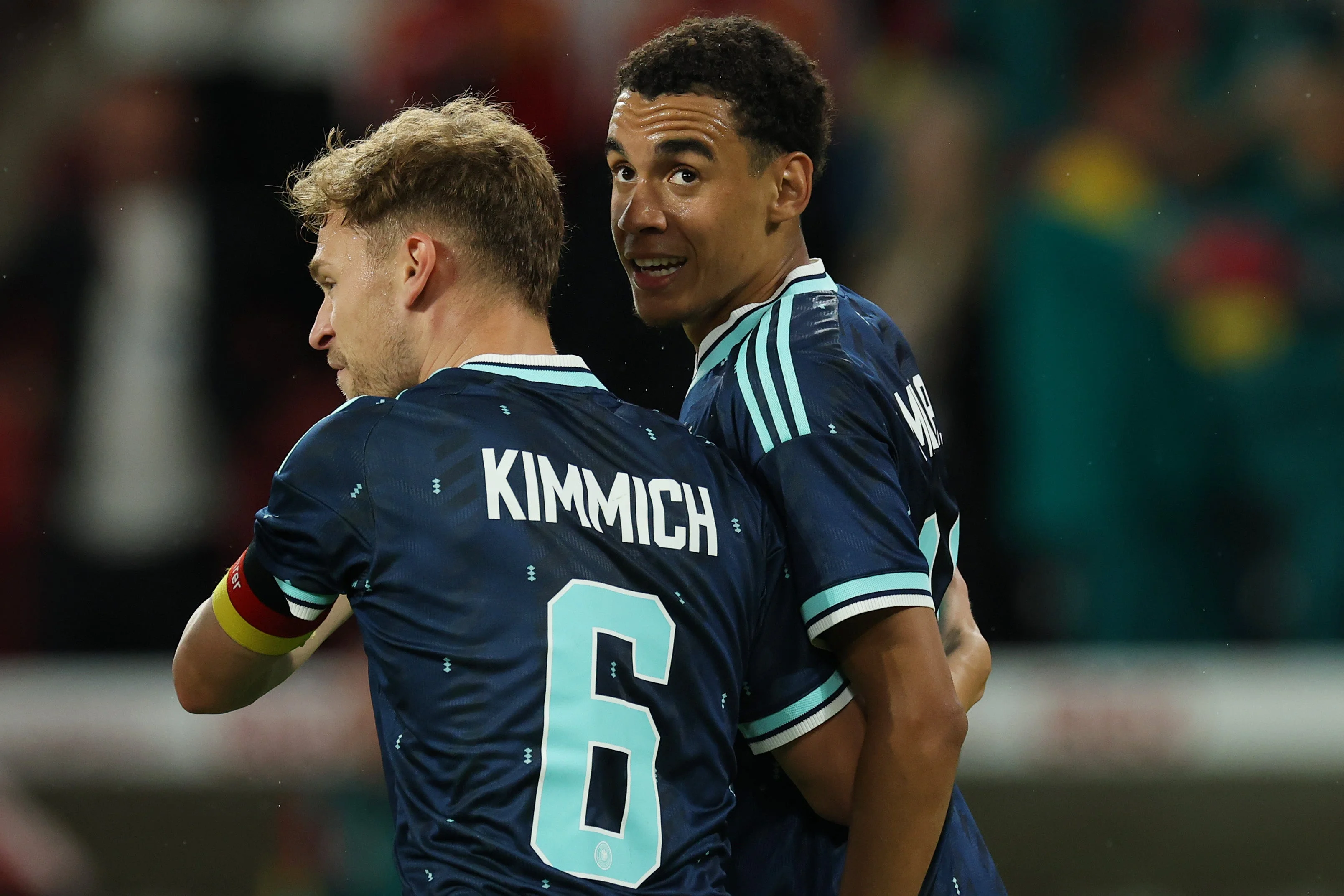
Speaking after Bayern’s 2-1 Champions League defeat at Lille on Wednesday, Kimmich objected to the way criticism had been aired publicly. “It must never happen that the burden is placed on a player,” he said. “The club is obviously the top priority and bigger than a player, but it's not bigger than a person. That's an absolute no-go and it is not Bayern-like either.” His language was pointed, and it came from a senior teammate rather than an outside observer. That gives the remarks weight inside the club, even as they leave open exactly which public comments he was addressing.
Kimmich also pushed back against suggestions that Musiala’s difficulties reflect a lack of professionalism. He pointed instead to injuries over the past two years, including a badly fractured leg at last year’s Club World Cup. “He's there every day trying to get the maximum out of himself,” Kimmich said. The defense is also a reminder that a player’s availability and form can’t be read from match appearances alone. Recovery from injury often involves setbacks, and a return to training doesn’t automatically mean a return to a player’s previous level.
Questions over Musiala’s health timeline
The dispute follows public scrutiny of Musiala’s performances and contract after he experienced two seizures during pre-season matches. Bayern met with his representatives on Tuesday to establish the sequence of events, rejecting claims that he concealed his condition before signing a contract extension. The timing is central to that disagreement: it shapes whether the club and player understood the health issue in the same way when the contract was agreed.
The club and Musiala’s representatives agree that he was first examined for seizure symptoms in April 2025, two months after the extension. Bayern said the examination took place “in consultation with FC Bayern and its medical unit immediately after the neurological symptoms first appeared.” Musiala disclosed his diagnosis publicly in August, after collapsing during two pre-season games. Those statements provide a timeline, but they don’t by themselves explain every step in the medical discussions or settle how the earlier public criticism should be judged.
Bayern coach Vincent Kompany said the episodes were triggered by a change in Musiala’s medication. The midfielder was rested at the start of the campaign and has since missed matches with a muscle injury. FIFPRO had also voiced opposition after the club’s public criticism. Here's the thing: a medical explanation and a performance assessment aren’t interchangeable. A club can need clarity about a player’s availability, but that doesn’t make every detail suitable for public debate.
A difficult week for Bayern
Musiala came on in the 76th minute against Lille, as Bayern’s season took another turn for the worse. Harry Kane injured his ankle on Friday and faces months out, while Bayern have surrendered the Bundesliga lead and sit 15th in the Champions League standings. That combination leaves the team facing pressure on several fronts, with reduced certainty over both its results and the players available to change them.
The numbers here are underwhelming, but they don’t explain the club’s internal decisions. Bayern still has to assess Musiala’s fitness, decide how he fits into the team and answer questions about the account it has given publicly. Those tasks are related, yet they call for different kinds of judgment. A difficult run of results may sharpen scrutiny, but it doesn’t make a player’s medical history a useful proxy for commitment.
What the episode means for Bayern
Kimmich’s comments make clear that the response to Musiala’s fitness will remain under scrutiny. The club now has to manage the sporting uncertainty without turning a player’s health into a public burden. This is more significant than it looks: how Bayern handles the next discussion may affect whether players and supporters see its stated family values as a working principle or a slogan.
If you're working in this space, the tension is familiar: elite clubs need to communicate about availability, but public explanations can quickly become judgments about a person. (And this is the part most people overlook.) A statement intended to explain a selection decision can carry a different meaning when it touches on a player’s health. That said, Kimmich’s intervention doesn’t resolve the underlying dispute; it raises the standard Bayern will be expected to meet as it explains what happened.
For Musiala, the immediate issue is whether he can return to consistent football after a spell marked by seizures, rest and a separate muscle injury. For Bayern, the task is broader: maintain clarity about the team while speaking carefully about the people in it. A more measured approach. The club’s handling of that balance will now be judged alongside its results.