United’s refereeing complaints meet a harder question
Manchester United left Sporting with a 2-2 draw and a familiar post-match dilemma: how much weight to give disputed decisions when the team also had opportunities to take control. Joshua Zirkzee’s answer was direct. “We should look at ourselves instead,” he told MUTV, arguing that the officiating mattered but couldn’t explain away United’s failure to win.
That distinction matters. A contentious call can change a match, especially when it erases a goal or produces a sending-off, but it can also become a convenient frame for a performance that had other problems. Zirkzee didn’t dismiss his teammates’ frustration. He said United should’ve been good enough to win regardless.
Decisions dominate a frustrating draw
Polish referee Szymon Marciniak disallowed Amad Diallo’s first-half equaliser after blowing his whistle before the ball reached the empty net. He’d judged that Youri Tielemans fouled Gonçalo Inácio during the move. Former United captain and BBC Radio 5 Live pundit Ashley Young called the officiating “a disgrace,” a sharp verdict that reflected the controversy around the decision.
The timing of the whistle is central to the frustration: once play has been stopped, the ball going into the net can’t restore the goal. From United’s perspective, that left little room for the move’s outcome to settle the argument. For a team chasing a result, the difference between an equaliser and a dead-ball stoppage is substantial.
Zirkzee’s frustration deepened when he was shown a second yellow card late in the match. United also had a potential winner ruled out after Marciniak reviewed the incident at the pitchside monitor and decided Patrick Dorgu had fouled goalkeeper Kaique Pereira. Two high-profile calls against United made the referee an unavoidable part of the story.
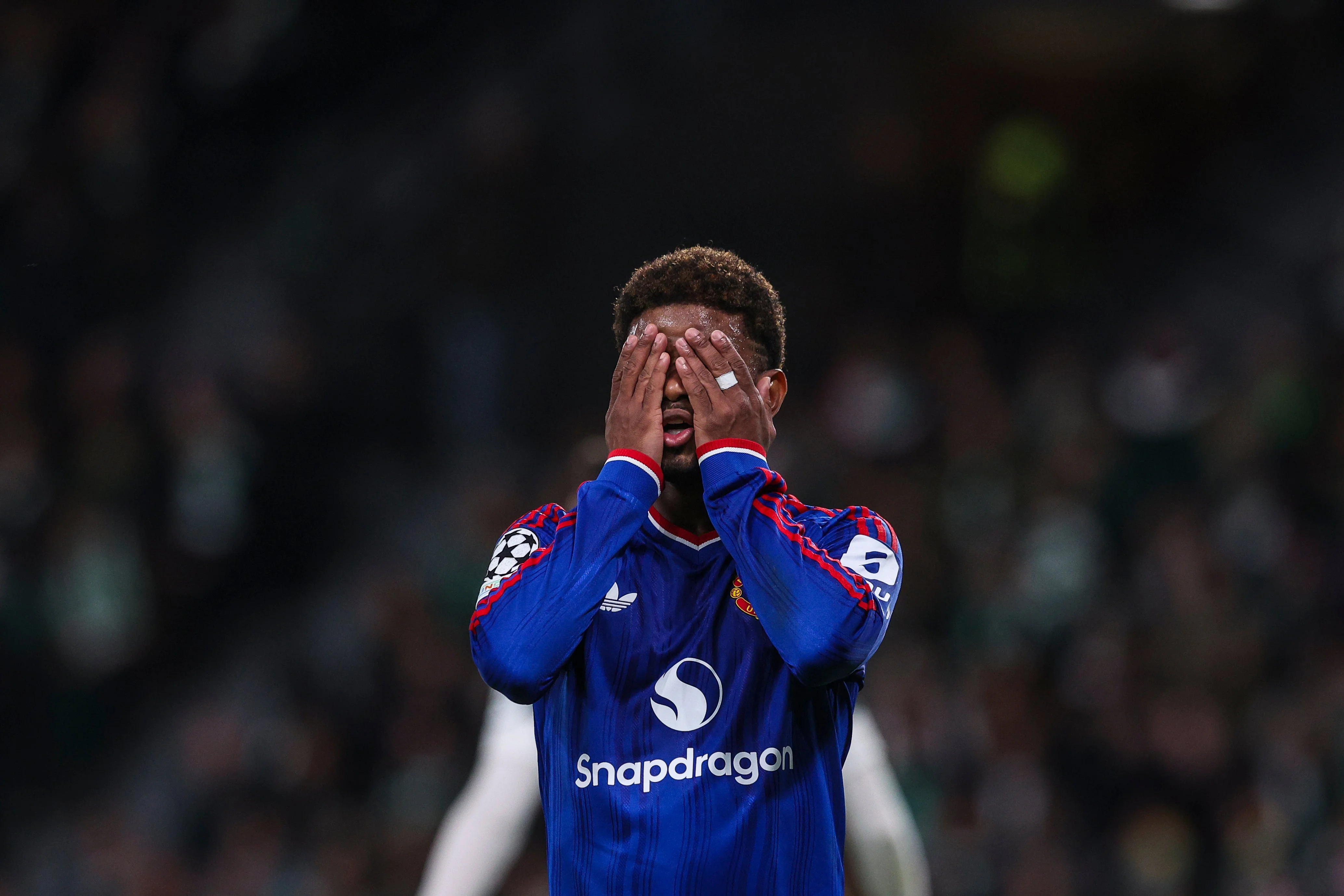
Sporting also had a first-half penalty after slight contact between Lisandro Martinez and Geny Catamo. Senne Lammens saved the spot-kick, another major moment in a match where both sides had reason to scrutinise the decisions.
“There were definitely some key decisions there that didn’t really favour us,” Zirkzee said. “But the team that we have, we should come here and not look at the ref and make sure that we get the win, regardless of the decisions that he makes.” That’s a measured response from a player who’d just experienced both a disallowed goal and a sending-off. The numbers on the scoreboard don’t show how much the calls shaped the match, but they do show United didn’t leave with the win.
Zirkzee welcomes first start
The draw was also Zirkzee’s first start of the campaign. He said he was pleased to be back in the starting lineup, while wishing the performance had produced a victory. He thanked the travelling supporters and said the team needed to repay their backing in the next match.
That appeal to supporters carries an obligation as well as gratitude. Away fans have made the trip; the players’ response has to come through the football. Zirkzee’s comments point to a straightforward standard: acknowledge the backing, then give those supporters a result to take home.
United could take positives from the match, he added, but their recent form made the dropped points disappointing. His instruction was to keep working together and turn attention to the next game. A draw can offer some encouragement, but it doesn’t erase the cost of letting a lead slip.
How the match turned
At Estadio José Alvalade, Luis Suárez put Sporting ahead from the penalty spot. Bruno Fernandes then scored twice to give United the lead, with one of his goals also coming from a penalty. Sporting’s late equaliser arrived when Suárez capitalised on a Lammens error.
That sequence leaves United with a result shaped by both contentious officiating and a costly mistake. The penalty save had kept them in the contest, and Fernandes’ two goals put them ahead; the late error handed Sporting a way back. The disputed calls are real, but they’re only part of the account.
What United need to take from it
United sit 19th in the Champions League standings. Mauricio Pochettino will seek his first win in charge when the team host Brentford in the Premier League on Saturday. The immediate test is whether the group can carry Zirkzee’s self-criticism into that match, rather than letting the debate over Marciniak consume the post-match discussion.
This is more significant than it looks: Zirkzee’s message shifts attention from an argument the team can’t settle after the whistle to the standard it can control in its next performance. If you’re following United, that’s the useful question now: can they turn frustration into a better showing? Here’s the thing: one draw won’t answer it. The response will.
And yet, that doesn’t make the refereeing controversy irrelevant. It’s part of why the match will be remembered, alongside the saved penalty, Fernandes’ goals and Lammens’ late error. United have a point, a list of grievances, and work to do. The next game is the chance to show which one gets their attention.