Mauricio Pochettino’s first match as Manchester United manager offered a brutal measure of the job in front of him: his side conceded twice and lost a player before half-time, then finished 4-0 down at Anfield. The defeat matched the heaviest loss by a United manager in his first game and was the worst such debut in a century. Liverpool supplied the goals; United supplied too many of the conditions that made them possible.
“So painful,” Pochettino said. “So disappointed.” His first day of meaningful work showed how quickly a match can overwhelm a plan at this club. The United supporters heard their new manager’s name sung by Liverpool fans, who turned it into a taunt: “Poch is at the wheel.” Before Pochettino could make a first substitution, his team had already been reduced to 10 men. The change came in the 22nd minute.
A familiar collapse in a new regime
The red card shaped the afternoon, but it didn’t explain the whole performance. United were already showing the failings that have dogged them through recent upheaval: poor defensive decisions, fragile organisation and a tendency to let one setback become several. They had conceded twice in 18 minutes against Roma, four times in 18 minutes against Aston Villa and were two goals behind to Liverpool inside 13 minutes. A change in manager hadn’t yet changed the pattern.
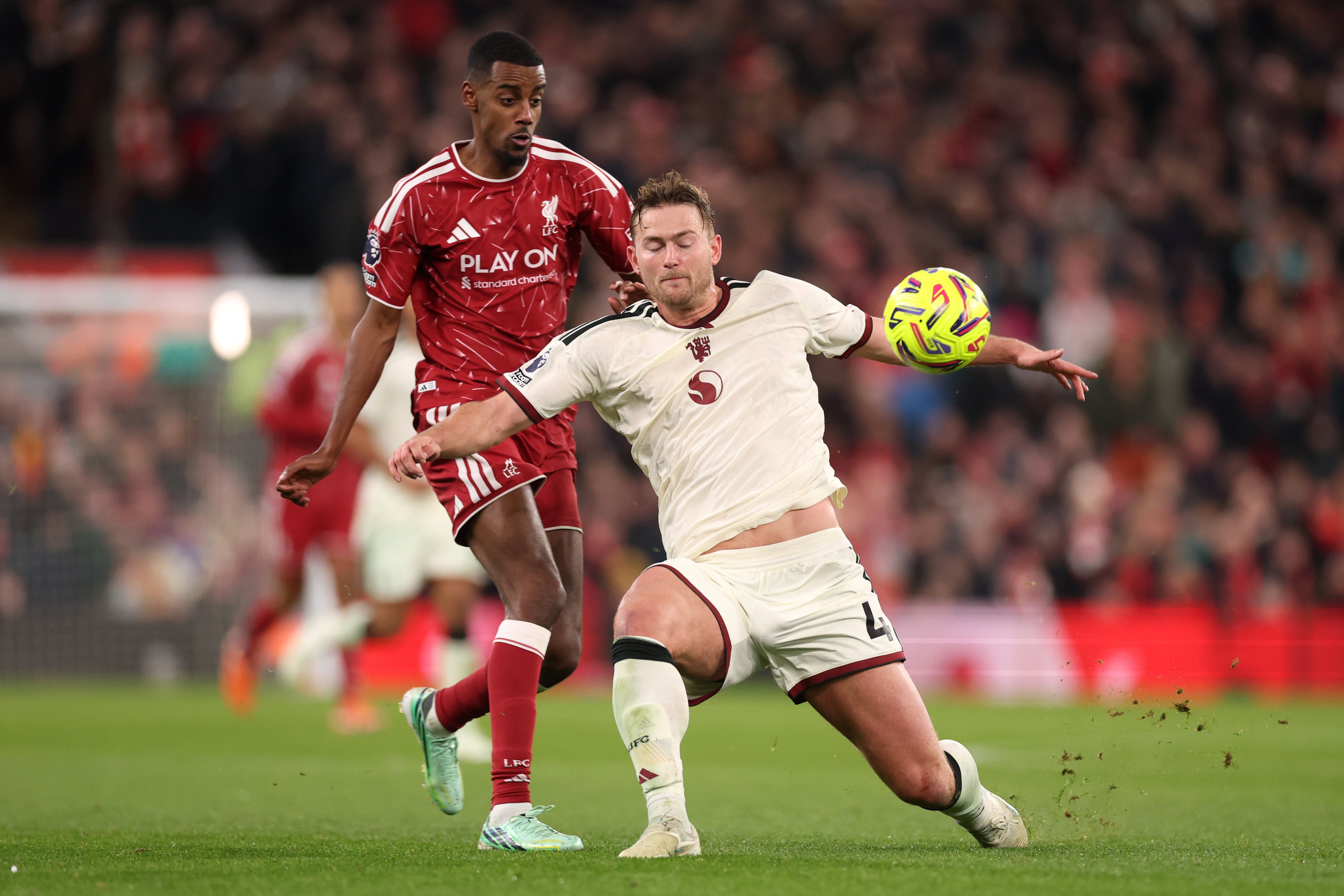
The first major error came when Matthijs de Ligt left Ronald Araujo’s long ball rather than dealing with it. Alexander Isak ran into the space behind United’s defence, and Leny Yoro brought him down. Referee Sam Barrott sent Yoro off for the foul. Pochettino called it “an unfair situation” and said, “It was clear that was not a red card.” His opposite number, Andoni Iraola, saw it differently: “It is clearly the last man, clearly a foul.”
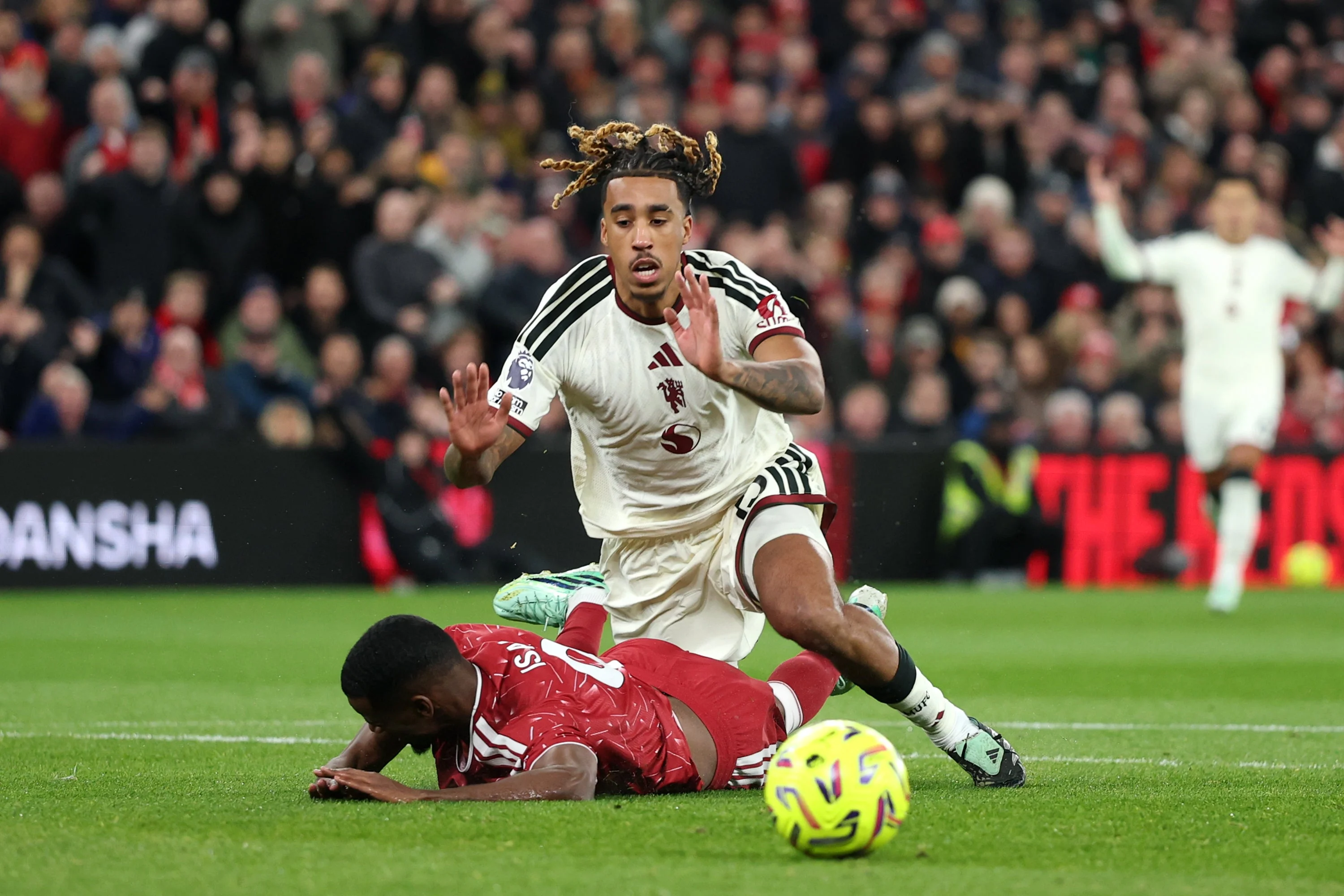
Dominik Szoboszlai then drove the free kick through a disordered wall and into the net. The early goal gave Liverpool the lead; the dismissal left United with almost the entire match to play a man down. Chants of “going down” and “sacked in the morning” followed from the home crowd.
There was a historical parallel for the scoreline, though not much comfort in it. Sir Alex Ferguson lost his first match in charge, 2-0 at Oxford 40 years earlier. Only Lal Hilditch had started a United managerial reign as badly as Pochettino, with a 4-0 defeat in 1926.
Liverpool punished United’s mistakes
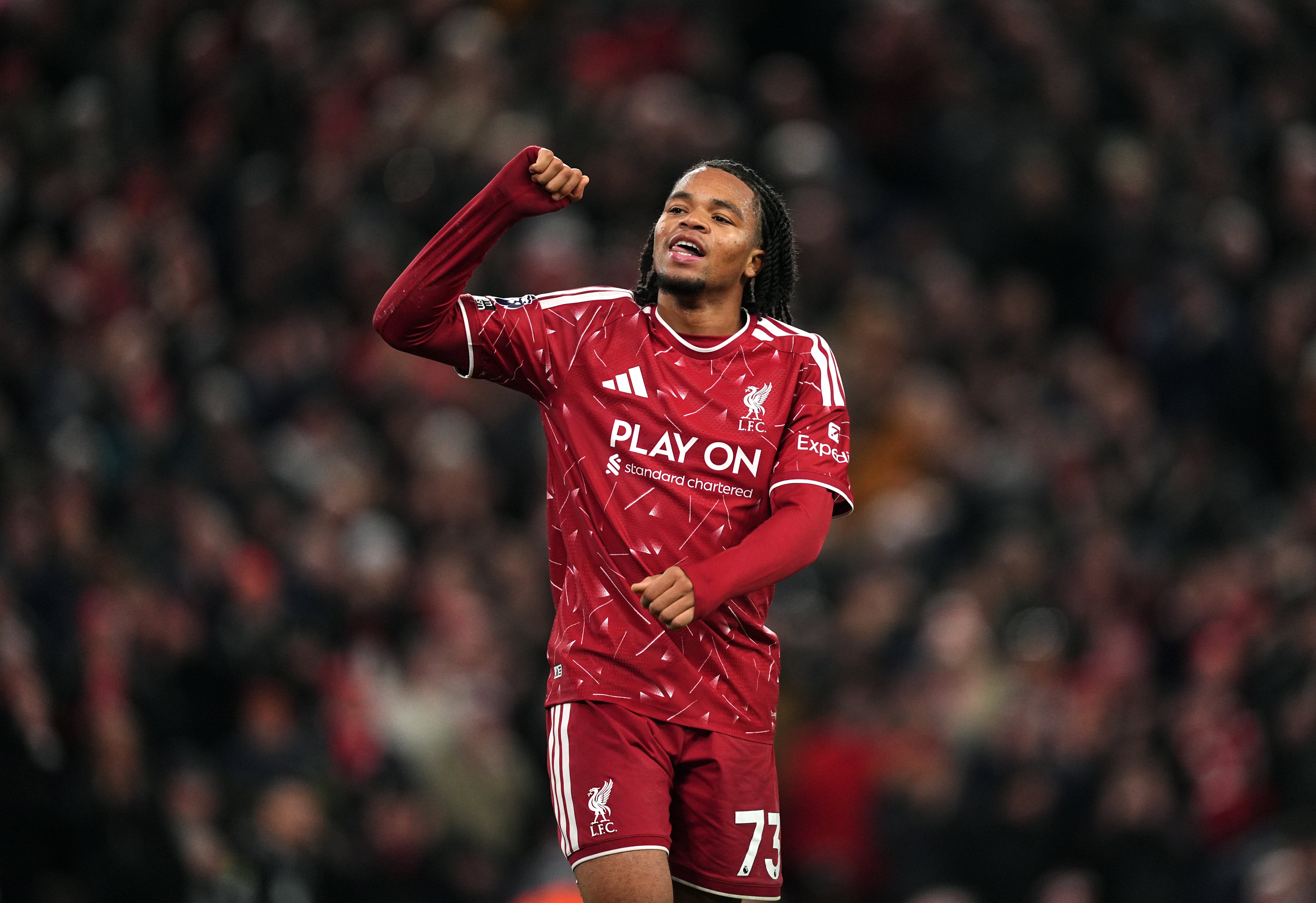
Liverpool’s attack moved with the pace and conviction Pochettino will want from his own teams. Florian Wirtz produced a standout finish, Bradley Barcola repeatedly stretched the defence with his speed, and teenage forward Rio Ngumoha made a vivid impression. Their quality mattered, but United’s errors gave it room to decide the match.
Wirtz’s goal came from an inventive finish: he hooked a volley into the net after Ngumoha sped past Diogo Dalot and lifted a cross into the area. Wirtz had faced questions about how often he had shaped major games for Liverpool. This was a forceful response, and he added an assist to his second goal in as many matches. “He’s in a lovely moment,” Iraola said.
Liverpool eased off late in the first half, then increased the pressure after the break. Barcola had missed chances earlier, but his pace created the next goal. He surged forward and supplied Ngumoha, who scored to become Liverpool’s youngest scorer against United, surpassing Michael Owen’s record. Ngumoha had spent much of the afternoon troubling Dalot.
The fourth goal exposed another weakness. Virgil van Dijk dispossessed Joshua Zirkzee 25 yards from the United goal as Liverpool pressed high. Wirtz combined with Victor Munoz, who curled the ball into the net. Iraola celebrated in front of the Kop with fist pumps reminiscent of Jürgen Klopp.
“We probably should have scored more than four,” Iraola said. Liverpool had chances to do so. Senne Lammens saved efforts from Isak, Alexis Mac Allister and Szoboszlai; Harry Maguire made an important block against Isak. Later, Isak shot wide after De Ligt failed to connect with the ball again.
Pochettino’s choices under scrutiny
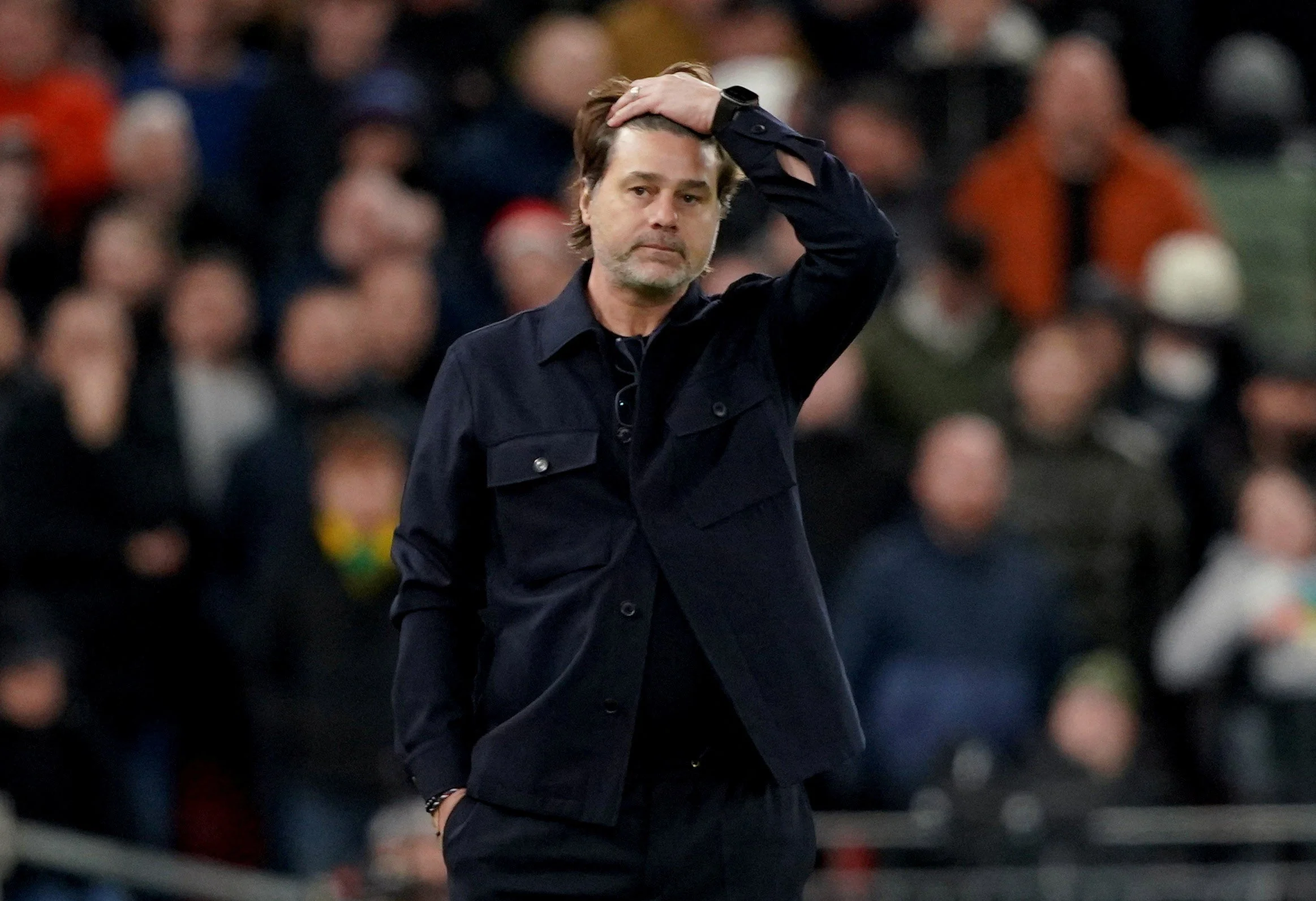
The scale of the defeat also put Pochettino’s early decisions under the spotlight. De Ligt had been selected for his first league appearance of 2026, and his error contributed to the red-card sequence. Maguire, meanwhile, was left out of the starting side before being brought back into the match. One game can’t settle the merits of either call, but Pochettino’s introduction left little room to ease into his new role.
United also cycled through shapes as the match slipped away. Pochettino appeared to start with a 3-4-3 influenced by Ruben Amorim’s approach, then shifted towards a 4-2-3-1. After Yoro’s dismissal, he tried a 4-4-1 and later a 5-3-1. “After what happened, happened and the plan was in the bin,” he said.
Pochettino argued that playing with 10 men for roughly 80 minutes at Anfield made the result harder to judge. “We concede four goals with 10 men, and in a circumstance after playing 80 minutes at Anfield,” he said. The disadvantage was real, but so was the position United had created for themselves: an early defensive lapse, a sending-off and a set-piece goal that deepened the damage.
The immediate task is to stop United’s recurring collapses from setting the terms of every match. Pochettino inherited a team in the relegation zone, and his first game ended in a heavy defeat to its biggest rival. Liverpool’s pace made the gap plain; United’s repeated mistakes made the work ahead even clearer.