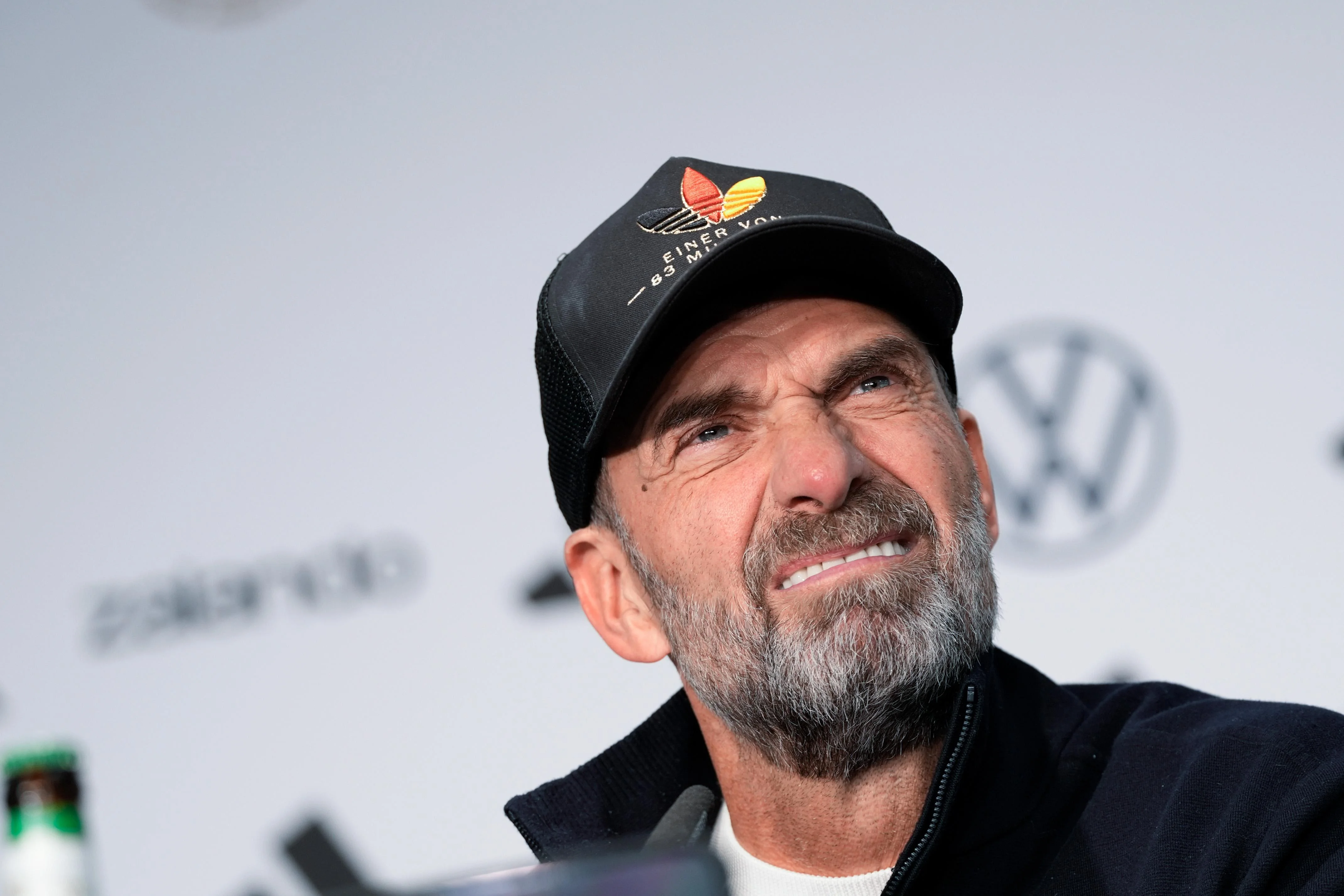
Topping Group A2 looked like a comfortable outcome for Germany. Friday's draw in Nyon turned it into a harder assignment: a quarterfinal against Belgium, which finished second in Group A1 and arrives with experience and attacking quality.
The 5-0 demolition of the Netherlands was the result that mattered most. It went a long way toward erasing the rough patches of Jürgen Klopp's early months in charge. But thumping a group rival doesn't tell you how a team handles a side with real firepower over two legs. This tie does.
Group results carry a particular kind of noise. A heavy scoreline against a side still finding its footing tells you about finishing, pressing, and whether the midfield can keep its intensity up. It tells you far less about how a team reacts when the opponent is sharper, the margins tighten, and one mistake carries real weight. That's the question Belgium poses. And yet a 5-0 win is hard to dismiss, and it's fair to treat it as evidence of progress rather than a fluke.
What the Belgium tie tests
The quarterfinal is played over two legs between March 25 and 30. Belgium hosts the first leg on March 25, and Germany gets the return at home on March 30. That gives Germany something to build on, but two-legged knockout ties against well-equipped opponents often hinge on a single away performance. Here's the thing: the Netherlands result suggests the attack is working, while Belgium will test whether the defensive shape holds up when the space shrinks.
Home advantage in the second leg is valuable, but it's a double-edged asset. Teams that enter a return leg with a lead often play more cautiously, and that caution can invite pressure rather than deflect it. If Germany are level or behind after the first leg, the whole dynamic shifts quickly. The away game is where this tie is most likely to be decided, and that's the part I'd watch closest.
Getting past Belgium doesn't end the work. The semifinal against the winner of England and Norway is scheduled for June 9–10, so the quarterfinal is really a gateway to a second serious test. Plan for two rounds, not one.
The rest of the bracket
Spain against France is the match everyone will circle. Spain beat France 2-0 in the World Cup semifinal, and this rematch brings Lamine Yamal and Kylian Mbappé into a two-legged contest that's about as heavyweight as the Nations League gets. One of Europe's elite will be out before the Final Four. The previous meeting adds a layer of memory to the tie, and that matters when two sides with strong records meet again with something on the line.
England against Norway is nearly as compelling. Thomas Tuchel's side meets Erling Haaland and Norway again, following England's extra-time win in their World Cup quarterfinal. That result shows England can grind out a tight game, which counts for a lot when a tie stretches into extra time. Norway, though, has a forward who can change a match with one moment, so the margin for error is thin on both sides. Harry Kane, the Bayern Munich forward and Ballon d'Or winner, gives Tuchel a serious weapon, and Norway has the talent to make things uncomfortable. England will fancy its chances, and I think that's a reasonable read.
Netherlands against Portugal may be the least predictable tie. On paper, Portugal holds the edge as defending champion, and that's a sensible starting point. But defending a title doesn't guarantee anything in a two-legged knockout, and the Dutch have their own reason to push back. Finishing behind Germany in the group is the kind of result that stings, and it's fair to read it as motivation. Here's the thing: this tie may come down to which side handles the pressure of expectation more cleanly.
Where the bracket leads
The winners of Spain–France and Netherlands–Portugal meet in one semifinal, while Germany's potential path runs through England–Norway. Structurally, that splits the bracket so the most demanding names sit on different sides of the draw, which is a sensible design. It also means whoever emerges from the Spain–France and Netherlands–Portugal ties will likely face a stern test before the final. The bracket offers no easy route to the trophy for anyone.
What this means for Germany and the wider tournament
Germany's progress under Klopp is real but still early. March will show whether the Netherlands win marked a turning point or simply a strong stretch against a group that asked less of them. Two legs, one away game, and very little room for error. That's the test.
The bigger question is whether Klopp's approach can survive a knockout tie decided by small margins. I'm not convinced the group stage answers that, and the Belgium tie won't settle it on its own. But it'll get much closer to an answer than anything in the group stage did. If you're tracking Germany specifically, the next two legs will tell you more than the 5-0 scoreline ever could.
If you're following the tournament from the outside, the bracket is worth watching for more than its headline names. Ties like Netherlands–Portugal often produce the sharpest tactical contrasts, and they reveal how coaches handle the weight of expectation. That's where the real story usually sits, and it's the part that rarely shows up in a highlights package.