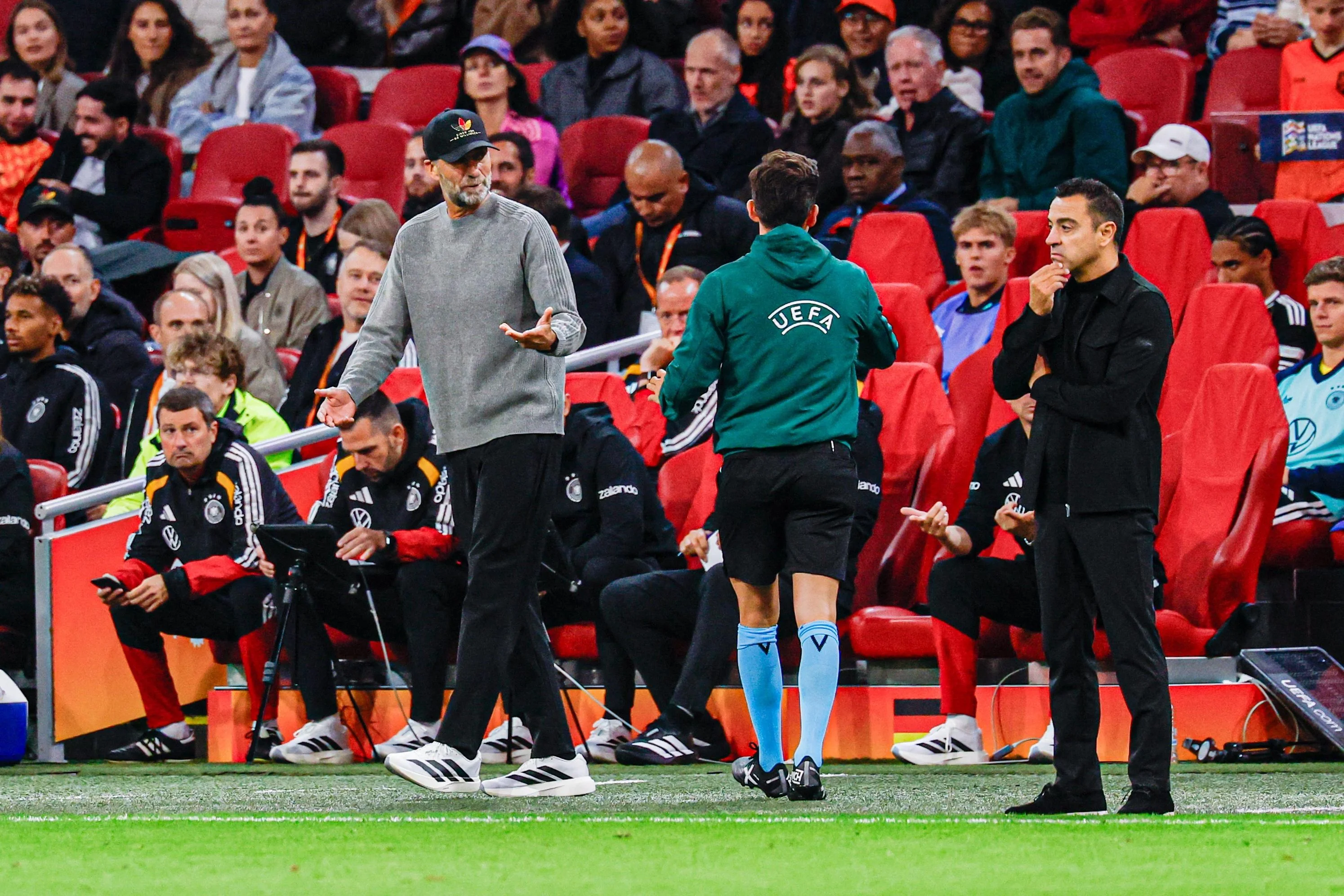
Different stakes for Germany and the Netherlands
Germany’s match against the Netherlands carries a different kind of pressure for each side. Germany is chasing a place in the UEFA Nations League knockout round after a 3-1 win over Serbia, while the Dutch can likely secure first place by avoiding a heavy defeat. That gap shapes the contest: Germany has a result to pursue, while the Netherlands can decide how much risk is worth taking.
The Dutch cushion gives them room to prioritize control over ambition. They don’t need to chase a win if doing so opens space for Germany, and a measured performance may be enough to protect their position. Germany, by contrast, has to weigh the need for goals against the danger of conceding them. The arithmetic leaves little room for a one-size-fits-all plan.
Germany’s route depends on Greece
Germany controlled possession and the tempo against Serbia, with the result also cementing its place in EURO 2028 qualifying. That performance offers encouragement, but the Nations League calculation depends on Greece’s result as well as Germany’s own. The team can’t treat this as a straightforward must-win match in every scenario; the required margin changes according to what happens elsewhere.
- If Greece loses, Germany advances with a draw or win.
- If Greece draws, Germany needs a win.
- If Greece wins, Germany must win by at least four goals or finish ahead of Greece on goal difference. Greece currently trails by eight goals.
Those conditions put a premium on awareness as the match unfolds. A draw may be enough in one scenario and inadequate in another, while a Greek win would make the scoreline itself central to Germany’s prospects. The eight-goal gap gives Germany some margin on goal difference, but it doesn’t remove the need to watch the other result.
That’s a complicated position for players and staff to manage in real time. Germany needs to attack with purpose, yet the best course may shift as the group standings change. And the team can’t assume that possession alone will produce the goals required.
The Dutch have room to manage the risk
The Netherlands arrive after a 7-0 win over Greece. Xavi Hernández’s side has a substantial cushion: only a heavy loss to Germany would put its knockout-stage place in doubt. A cautious approach could be enough to preserve the Dutch lead in the group, even if they don’t win.
That score against Greece gives the Netherlands a strong position, though it shouldn’t be read as a guarantee of an easy night in Berlin. Germany’s need for a result could make the match more direct, especially if the other group fixture raises the pressure. The Dutch can absorb some of that urgency, but sitting too deep for too long would invite Germany to dictate the tempo.
Here’s the thing: the Netherlands’ advantage is as much about choice as it is about the table. They can let Germany carry more of the burden, then look for openings when the home side commits forward. If you're working in this space, that tactical imbalance is the key detail to watch.
Match outlook
Germany looks capable of taking the points, though the Netherlands’ position gives it reason to manage the risk. In their September meeting, Germany played the better football but conceded a stoppage-time goal to Cody Gakpo. That late concession is a reminder that control can fail to settle a match, particularly when one decisive moment changes the result.
My prediction is a 2-1 Germany win. I expect a quiet first half, followed by quick goals from both teams. The scoreline would suit Germany’s need to make its advantage count while still reflecting the threat posed by a Dutch side that doesn’t have to force the game from the opening whistle.
Niclas Füllkrug could decide it late, pouncing on a loose defensive clearance in the 83rd minute. A prediction that specific is inherently uncertain, but the broader expectation is that Germany’s pressure will create opportunities as the match opens up. The numbers here are underwhelming as a basis for certainty; the group scenarios tell us more about the stakes than they do about how the game will play out.
What the result could mean
This is more significant than it looks for Germany because its path depends on both its own performance and Greece’s result. The team may need to adapt its approach once the group picture becomes clearer, while the Dutch can start from a more defensive position in the standings. That difference could make patience as important as attacking quality.
And yet. A comfortable lead on paper doesn’t prevent the Netherlands from being tested if Germany scores early, and Germany’s control against Serbia doesn’t guarantee that it’ll turn possession into enough goals. The match could hinge on whether Germany can convert pressure into a margin, or whether the Dutch can keep the game within reach of their preferred, lower-risk plan (and this is the part most people overlook).
There’s little value in treating either team’s position as settled before kickoff. Germany has a clear incentive to push, but its route isn’t entirely in its hands. The Dutch have more flexibility, though preserving that advantage still requires a disciplined performance.
Match details
- Venue: Olympiastadion, Berlin, Germany
- Date: Monday, November 16, 2026
- Kickoff: 8:45 p.m. local time (2:45 p.m. EDT)
- TV and streaming: Fox Sports One, Amazon and ViX. Find viewing options by country.
- Odds: Germany -118; draw +300; Netherlands +280.