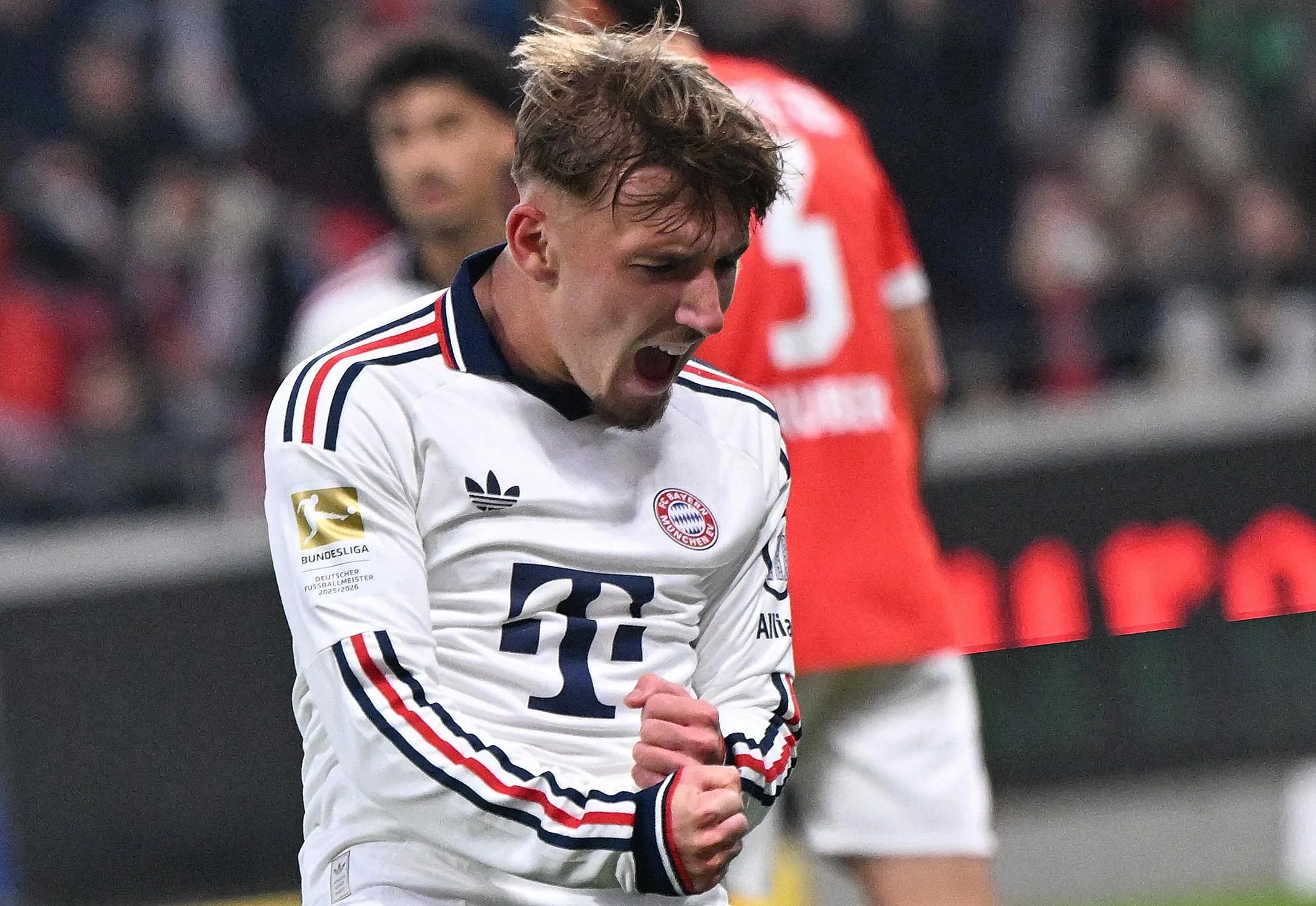
Uli Hoeneß says his criticism of Lennart Karl was meant as guidance, part of Bayern Munich’s responsibility to help a young player handle the attention surrounding him. The honorary president also says Karl’s recent ear-cupping celebration doesn’t bother him, despite interpretations that it was aimed at his critics. That distinction matters: Hoeneß is presenting the exchange as a question of mentorship, while the public response has made it a test of how Bayern’s senior figures speak about a teenager.
Hoeneß frames his remarks as guidance
Asked whether Karl’s ear-cupping gesture after scoring against Atlético Madrid was directed at him, Hoeneß said it didn’t bother him. He argued that his earlier comments may even have helped the 18-year-old, saying, “I think I played a part in 50% of his goals in recent days because someone made a comment about his private life.” The remark was delivered with a degree of self-assurance, but it also points to the uncomfortable dynamic at the heart of the story: public criticism can become part of the attention a young player is expected to absorb.
Hoeneß said experienced club figures have a duty to help young players stay grounded and cope with pressure beyond football. “I have so much experience, and if an 18-year-old can’t learn something from me, then we might as well give up,” he said. He added that he wouldn’t offer the same guidance to a veteran such as Harry Kane, arguing that younger players need support from people in positions of responsibility. The principle is easy to defend; the harder question is whether public comments about a player’s private life are the best way to provide that support.
That’s where Hoeneß’s explanation leaves room for doubt. Advice can be useful, but once it’s delivered in public, it also becomes part of the story around the player and may invite more scrutiny. Hoeneß appears comfortable with that trade-off, and he says Karl’s response didn’t offend him. Whether Karl sees the exchange as helpful is not established by the comments reported here.
A disagreement that became part of the story
The exchange followed a public disagreement involving Karl’s agent, Michael Ballack, who pushed back against Hoeneß’s earlier criticism. Karl, a former Eintracht Frankfurt youth player, had endured a patch of inconsistent performances before scoring the opening goal against Atlético and making the gesture after celebrating with teammates. The sequence gave outside observers a tempting narrative: criticism, response, then a goal. But a celebration alone can’t establish what a player intended, and the reported facts don’t settle whether Karl was addressing Hoeneß or anyone else.
That ambiguity is central. A gesture can be read differently by teammates, supporters and club figures, especially when a dispute has already attracted attention. (And this is the part most people overlook.) The reaction to the celebration may say as much about the existing argument as it does about Karl’s own thinking. The public disagreement has turned a brief moment on the pitch into a broader discussion about how a young player should respond to criticism.
For a teenager in a prominent club, attention can arrive before performances become consistent. That doesn’t make scrutiny unusual in professional football, but it does make the line between useful feedback and added pressure harder to draw. If you’re working in this space, the practical point is that a club’s words about a young player can shape the conversation around him as surely as a goal or a celebration can.
Improved form brings a new test
Karl’s final two matches before the international break showed a marked improvement, giving him a stronger run of form and more confidence as he joins Germany. The goals against Atlético are the clearest evidence in the account of that upswing, though two matches provide only a limited sample. A return to scoring form is encouraging; it doesn’t by itself show that a young player has solved the unevenness that preceded it.
His next test is whether he can sustain that progress with Germany and bring it back to Bayern when club football resumes. The international break offers a change of setting, but the account doesn’t specify what role Karl will have with the national side or how much time he’ll get on the pitch. So the question is straightforward, even if the answer will take longer: can he turn a brief improvement into a steadier contribution?
What the episode means for Bayern
This is more significant than it looks because the dispute connects performance, privacy and club authority in one short exchange. Hoeneß casts his criticism as experienced guidance; Ballack’s response shows that the framing wasn’t accepted without challenge. That disagreement doesn’t prove either side’s view of what Karl needs, but it does show how quickly a young player’s form can become entangled with arguments about who gets to advise him and how publicly that advice should be delivered.
For Bayern, the next useful signal will be Karl’s football: whether his improved form continues after the break and whether he can handle the expectations attached to his role. The commentary around him may persist, but the reported facts offer no basis for claiming that the celebration has changed his relationship with Hoeneß or his standing at the club. For now, the episode is a reminder that mentorship in public carries its own costs. And yet, the simplest measure remains performance over time.