Sunderland’s 1-0 win over Chelsea turned on two penalty appeals with very different outcomes. VAR judged that the contact on Cole Palmer happened outside the area; at the other end, referee Jarred Gillett awarded Sunderland a spot kick after Levi Colwill challenged Brian Brobbey. Enzo Le Fée scored it, giving the Black Cats a vital result.
Palmer’s appeal fell outside the area
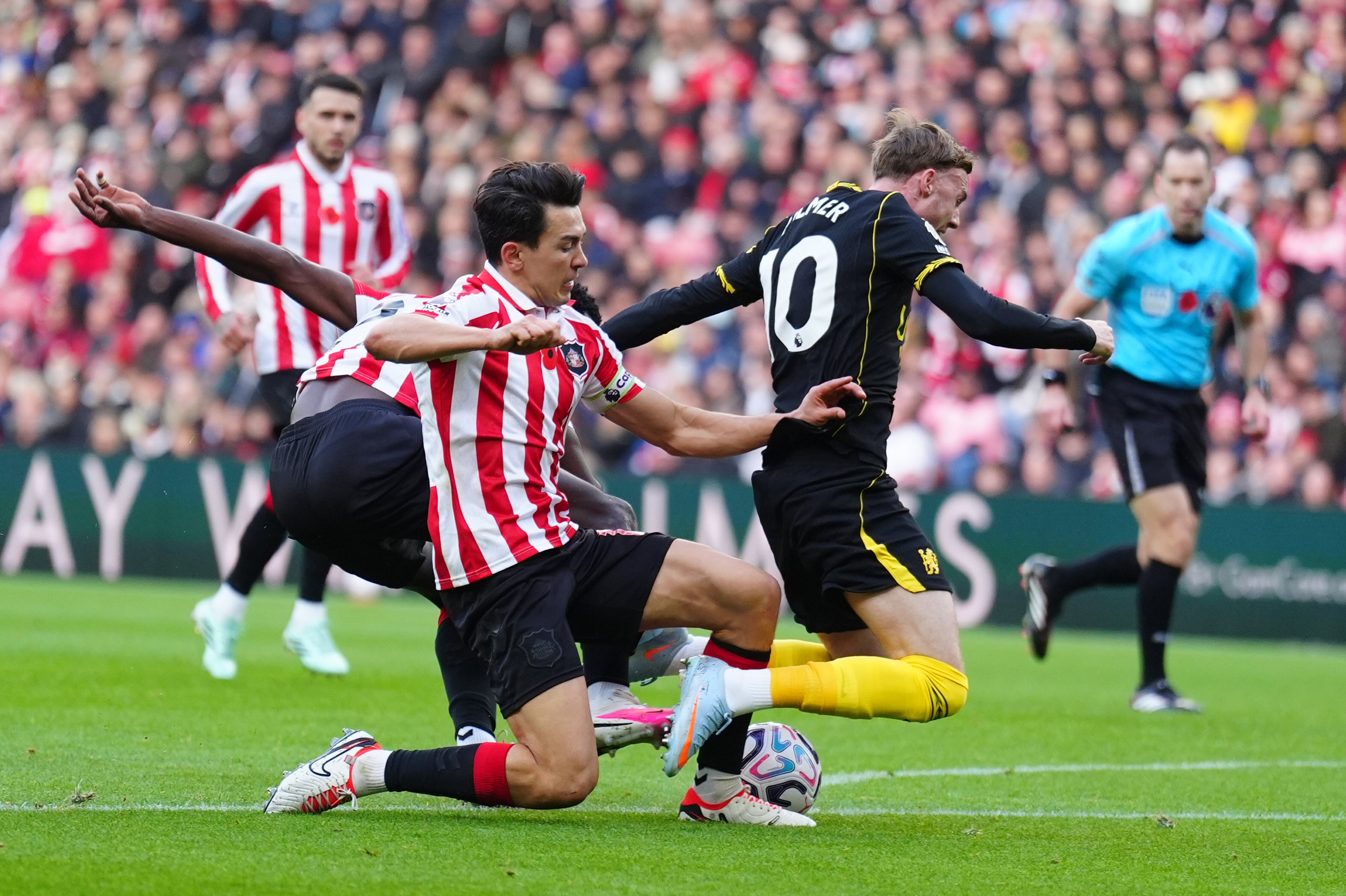
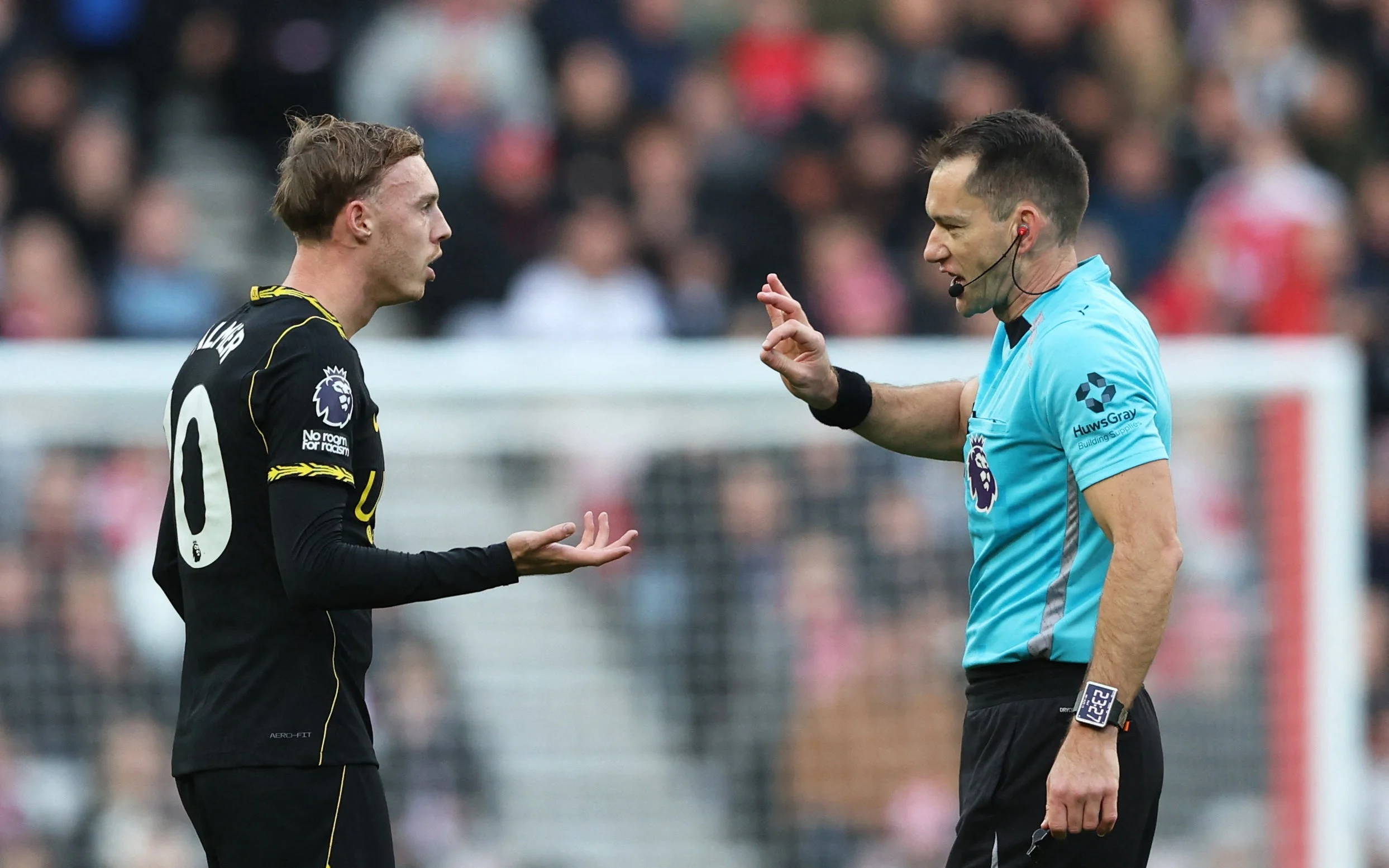
In the 24th minute, Palmer worked his way past Sunderland substitute Jules Ahoka and drove towards the box. Luke O’Nien came across from the side, and his left leg appeared to catch Palmer without touching the ball. Gillett let play continue. That initial decision left the key question for the review: where the contact happened, rather than where Palmer ended up.
VAR official Nick Hopton reviewed the incident and concluded the contact occurred outside the penalty area. Palmer’s momentum carried him into the box before he fell, but the Premier League Match Centre said “any contact with Palmer occurs outside the penalty area.” The distinction matters because a player going down inside the box doesn’t, by itself, make the incident a penalty. The review’s stated reasoning rested on the point of contact.
For Chelsea, that meant the appeal could not produce the spot kick Palmer appeared to want. For Sunderland, the decision preserved the on-field call, even though the sequence had carried into the area. There’s a familiar tension here: supporters tend to see the fall and the final position, while the officials’ explanation focused on the earlier contact.
Brobbey’s fall brought the decisive call
Eleven minutes later, Brobbey used his strength to get across Colwill and carry the ball into the box. The pair were holding each other: Brobbey had an arm against Colwill’s back, while Colwill gripped the striker’s shirt. As they moved into the area, Brobbey’s right foot appeared to catch his left and he went down. Colwill may also have clipped his heels, though the footage left that unclear. It was a crowded contest, with contact from both players, and that made the referee’s interpretation central.
Gillett pointed to the spot despite immediate protests from Chelsea players. Former Premier League referee Darren Cann told the BBC the decision was “spot on”, saying there appeared to be lower-leg contact that brought Brobbey down. Cann added that Gillett had “the perfect position to see the infringement and award the penalty.” His assessment gives a clear rationale for the call, though the footage described here leaves some uncertainty over exactly how Brobbey fell.
That uncertainty is part of why the two appeals will be discussed together. In Palmer’s case, the review focused on contact outside the box; in Brobbey’s, Gillett judged that a foul had occurred as the players entered the area. Similar penalty decisions often turn on small details of timing, location and contact, and those details can be difficult to separate in a fast-moving challenge. Here’s the thing: a close decision can be defensible and still leave room for disagreement.


Le Fée converted the penalty to put Sunderland ahead. That finish gave the award its consequence: a disputed decision became the only goal of the match, and Sunderland had a lead to protect. The scoring responsibility still belonged to Le Fée, who had to turn the opportunity into a goal. No margin for error.
Colwill came off at half-time, with Moisés Caicedo moving into defence for Xabi Alonso’s side, but Chelsea failed to mount a serious second-half threat and suffered their fourth defeat in eight league matches. The change in defensive roles marked a response at the interval, but the match didn’t swing back Chelsea’s way. Sunderland held on, leaving the penalty as the decisive moment rather than one incident in a comeback story.
A result that shifts the pressure
Sunderland had lost five of their previous six league games and dropped to the bottom of the table. This first win in eight lifts them off the foot and eases pressure on manager Regis Le Bris before the international break. The scale of the relief is plain: a team in a poor run needed a result, and it got one against Chelsea. That’s more significant than it looks in a match decided by a single goal.
The win doesn’t erase Sunderland’s recent run, and one result can’t answer every question about the side’s form. It does, however, change the immediate context around Le Bris and the team. For Chelsea, the defeat adds to a difficult stretch in the league, with the fourth loss in eight matches pointing to a problem that can’t be reduced to one refereeing call.
What the two calls leave behind
The contrasting penalty calls will draw scrutiny, but the scoreline was settled by the decision at Sunderland’s end—and Le Fée’s finish. The Palmer appeal offers a straightforward explanation from the Match Centre about location; the Brobbey decision has Cann’s support and a more contested picture of the contact. The gap between those accounts helps explain why the game’s defining moments may remain contentious after the result itself is settled.
If you’re working in this space, the match is a reminder that VAR can clarify one narrow part of a decision without removing every argument around it. Supporters can still debate the physical contact, the referee’s view and the players’ actions. And yet the practical effect is simple: Sunderland leave with three points, while Chelsea leave with another league defeat. That said, the result came from more than the review room. Gillett made the call, and Le Fée converted it.