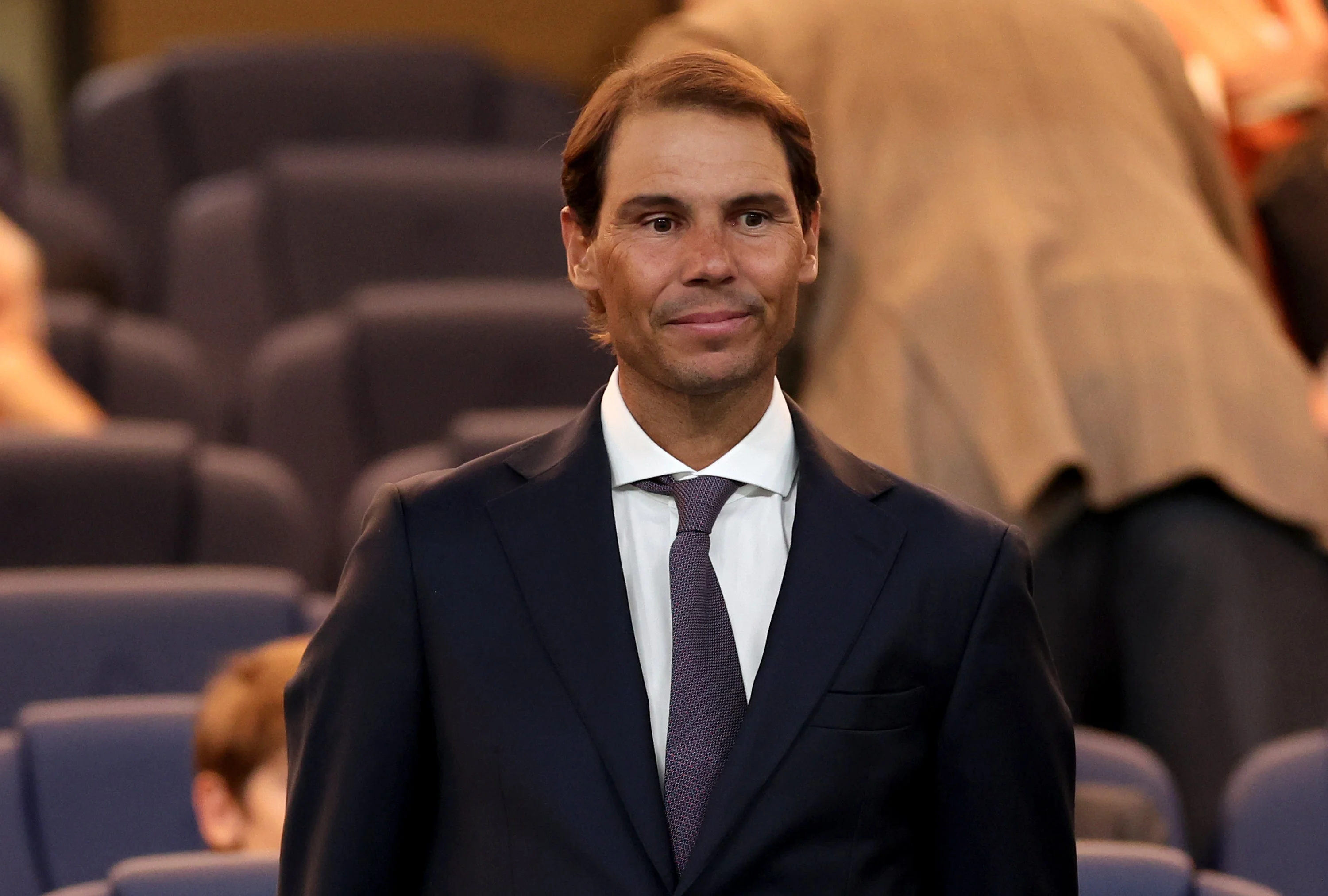
A new role at Real Madrid
Rafael Nadal’s long-standing support for Real Madrid now comes with a formal role: the club has added the retired tennis champion to its board of directors. The appointment was agreed at a board meeting on Wednesday, and the club will ask its general assembly of delegate members to ratify it. That vote is the next step in the process, so the board’s decision has established a proposal rather than completed every stage of the appointment.
Nadal said on X that he’d accepted the proposal from president Florentino Pérez and the board. “I have accepted this proposal with great excitement, a desire to learn, and a willingness to contribute everything I can,” he wrote. The wording signals that he sees the role as a responsibility to take on, not simply a title attached to his public profile. His reference to learning also suggests he’ll be entering a form of work distinct from the competitive career that made him famous.
A board appointment puts Nadal inside the club’s governance structure. The available details don’t spell out his specific duties, how often he’ll take part in board work, or which decisions he’ll oversee. Those limits matter: a celebrated name can attract attention, but the practical influence of any board member depends on the work assigned to the role and the way the board operates.
A fit with the club’s public identity
Real Madrid’s statement pointed to Nadal’s sporting record and personal qualities as reasons for the appointment. It cited his 92 individual titles, including 22 Grand Slam singles championships, two Olympic gold medals and five Davis Cups with Spain. Nadal also reached number one in the world rankings. The list gives the club a clear basis for presenting him as a figure whose achievements extend beyond one tournament or one team.
The club described him as “one of the greatest legends in the history of sport and one of the most admired and recognised Spanish athletes in the world”. It said his competitiveness, humility, respect for opponents and commitment to solidarity reflected values associated with Real Madrid. That’s the club’s explanation of the fit, and it frames the appointment as a connection between sporting success and conduct, rather than a decision based on fame alone.
That framing gives the appointment a public-facing dimension: Nadal brings a widely recognised sporting profile, while the club presents his conduct and career as aligned with its identity. The board role itself is subject to ratification by the delegate members’ general assembly. The distinction is useful. The club has made its case for Nadal’s place, but its members still have a formal role in confirming it.
This is more significant than it looks. A well-known athlete joining a major club’s board can strengthen the club’s public association with values it wants to emphasise, while also drawing attention to how the organisation is governed. The announcement makes the first point explicit; it doesn’t, by itself, tell us how much the second will change.
A connection that predates the appointment
Nadal has supported Real Madrid since childhood and has regularly attended matches at the Bernabéu. He has held honorary membership for years, and was a guest of honour at the 2022 Champions League final in Paris, where Real Madrid won its 14th title in the competition. The appointment formalises a connection that has been visible for a long time, rather than introducing a new supporter to the club.
His family ties point in a different footballing direction: his uncle, Miguel Ángel Nadal, played for Barcelona, Real Madrid’s bitter rival. That hasn’t diminished Nadal’s public attachment to the Madrid club. The detail adds a personal wrinkle to the story, but the club’s announcement is grounded in Nadal’s own record and his longstanding support, not in an attempt to turn that family history into a rivalry narrative.
For Real Madrid, the link between Nadal and the club is easy to explain to supporters: he’s been associated with the team for years, and his tennis career gave him a global profile. For Nadal, the new role offers a way to remain involved in elite sport after stepping away from professional competition. Whether the board position becomes a substantial part of his public life will depend on its responsibilities, which haven’t been set out in the announcement.
From the court to club governance
Nadal retired from tennis in 2024, closing a career that included 14 French Open singles titles, still a tournament record. His appointment shifts his connection with elite sport from the court to club governance. The next step is the delegate members’ vote. That move may be natural for a long-time supporter, but it asks him to contribute in a setting where sporting judgment and administrative work aren’t the same thing.
Board roles generally involve decisions about an organisation’s direction and oversight, though the source doesn’t describe Nadal’s expected remit at Real Madrid. It would be premature to assign him a specific portfolio or predict what he’ll influence. The clearer point is that the club wants his presence to count as more than ceremonial: Nadal said he intends to contribute, and the board has put forward his appointment.
If you’re working in this space, the useful question is what follows the announcement: whether the club clarifies Nadal’s responsibilities and how his experience will be put to use. A renowned athlete can bring perspective on performance, discipline and public expectations, but those qualities don’t automatically translate into effective governance. The work will show what the appointment means in practice.
And this is the part most people overlook: Nadal’s public association with Real Madrid already gives the club a compelling story, but a board seat carries expectations that honorary membership doesn’t. The vote will confirm whether delegate members accept the appointment; it won’t, on its own, reveal how much influence he’ll have. For now, the record is clear, the connection is longstanding, and the practical details are still to come. A new chapter, with its terms yet to be defined.