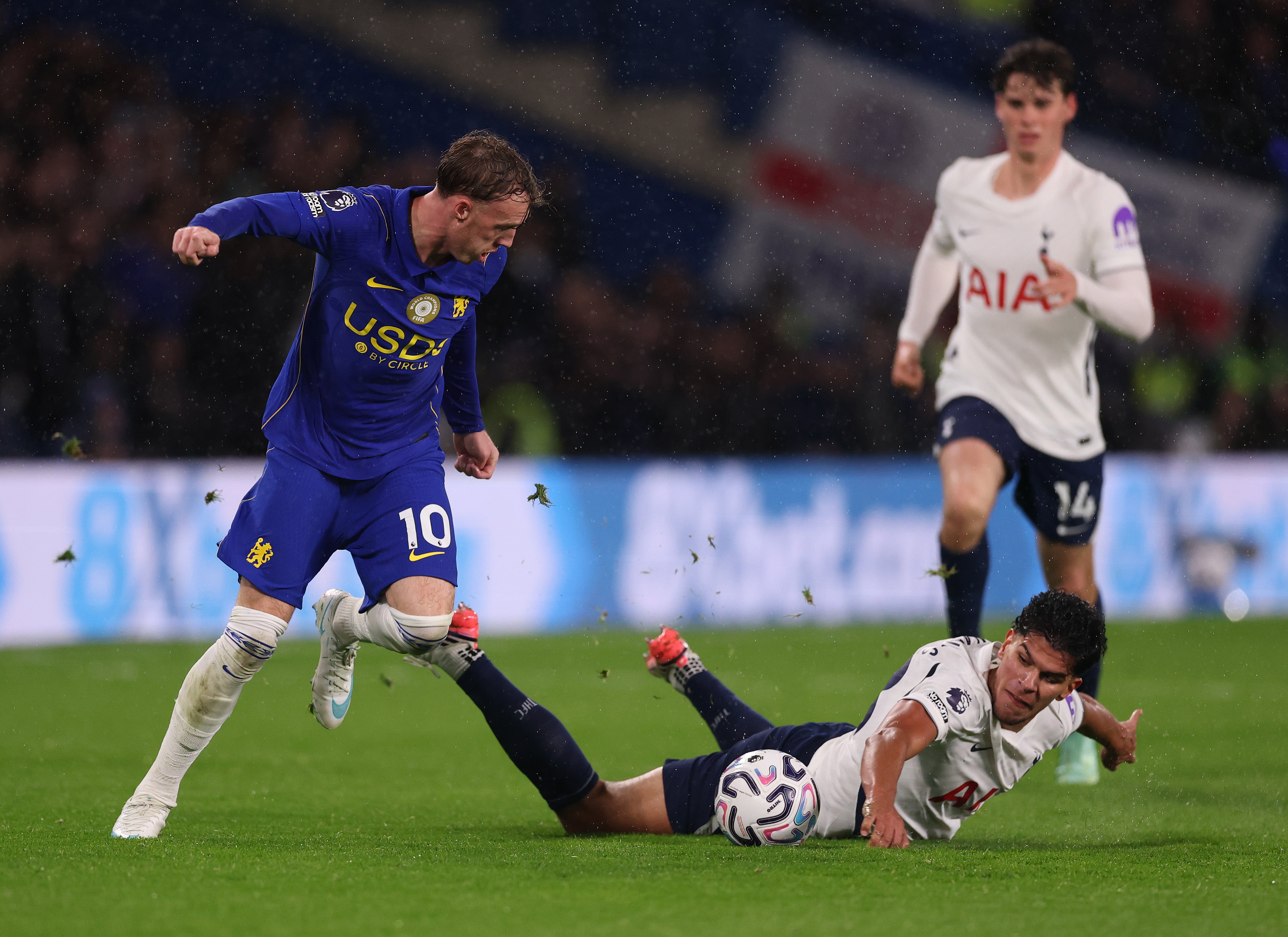
The Key Match Incidents panel’s review of Premier League decisions puts Cole Palmer’s 70th-minute challenge on Tottenham’s Mateus Fernandes at the centre of a split judgment. A majority of the five-member panel said the tackle warranted a straight red card, yet every member supported VAR’s decision not to recommend an on-field review. The distinction matters: the panel judged the likely correct sanction one way and the video officials’ decision about whether to intervene another.
The incident occurred during Chelsea’s 2-1 defeat at Stamford Bridge on October 24. By a 3-2 vote, the panel found referee Chris Kavanagh wrong to show Palmer a yellow card. The three members who backed a dismissal cited “clear contact to the head” and described the challenge as “unnecessary, dangerous and made with excessive force”. Their reasoning focused on the contact and the force involved, while the two members who did not support a red card reached a different view of the incident’s severity.
Palmer stayed on for another ten minutes. He was then sent off in the 80th minute after receiving a second yellow card for a foul on Conor Gallagher. That later dismissal doesn’t resolve the earlier dispute: the question is whether the first challenge should itself have ended Palmer’s participation. This is more significant than it looks, because a player can remain on the pitch after a challenge that most panel members believe met the threshold for a straight red.
Other decisions draw divided views
The panel also reviewed Aston Villa’s win over Manchester City and concluded that Villa should have received a penalty after Elliot Anderson tangled with Johan Manzambi. Three members said Anderson made no attempt to play the ball and deliberately widened his stance to obstruct Manzambi. That assessment turns on the nature of the movement: the panel’s majority saw obstruction rather than an ordinary coming together, a distinction that can determine whether contact merits a penalty.
Even so, the panel split 3-2 over whether VAR was right not to recommend an on-field review. Two members believed the incident amounted to a clear and obvious error. The split shows how the review threshold can remain contested even when a majority agrees that the original decision was wrong. For viewers, that leaves two separate judgments to track: what the referee should have awarded, and whether the error was clear enough to justify VAR intervention.
A separate review of Coventry’s match against Fulham found that VAR Jarred Gillett should have asked referee Adam Herczeg to assess a late first-half incident. The panel agreed with the eventual decision that Fulham should not receive a penalty, but said the referee should have reviewed two holding incidents around a corner. The recommendation was about the route to the decision as much as its result: the referee should have had the chance to assess the competing offences before play resumed.
Fulham’s Calvin Bassey held an opponent before the kick, then Coventry’s Bradley Thomas-Asante committed an offence once the ball was in play. The panel said VAR should have recommended a review so the referee could consider both actions and reach the outcome of a retaken corner. That sequence makes the case harder to reduce to a simple penalty appeal. The timing of each offence mattered, and the panel’s proposed remedy was to restart with the corner rather than award Fulham a spot kick.
Season figures put decisions in context
Premier League figures show that officials made the correct on-field call in 88 per cent of 162 key incidents reviewed so far this season, matching the rate at the same point last year. After VAR interventions are included, the figure rises to 99 per cent. Those rates offer a broad measure of decision accuracy, but they don’t remove the disputes exposed by individual cases: Palmer’s challenge and the Villa incident both show that reasonable panel members can disagree about intervention even while applying the same review framework.
The league is also taking part in an International Football Association Board trial that allows video officials to intervene when an attacking player commits a pre-kick foul at a set piece that directly affects a goal, penalty or red-card decision. The trial concerns a defined type of incident, while the reviewed cases here turn on tackles, obstruction and holding. Together, they show how VAR’s role continues to depend on both the possible outcome and the circumstances that justify asking a referee to look again.
What the disagreements mean for VAR
Here's the thing: accuracy figures can reassure, but they don’t tell supporters how consistently the intervention threshold is being applied. The reviews make that tension visible. In Palmer’s case, all five members agreed VAR should stay out even though three thought the referee’s yellow card was wrong; in the Villa case, the panel was divided over whether the missed penalty warranted a review. Agreement on a decision’s merits doesn’t automatically produce agreement on VAR’s role.
If you're working in this space, the practical question is whether future explanations can make that two-step reasoning easier to follow: first, what decision should have been made; second, why the error did or didn’t meet the threshold for intervention. A clear account of both would help readers understand why a panel can criticise an on-field call and still support VAR’s restraint. (And this is the part most people overlook.) A review can endorse the process while finding the outcome wrong.
For now, these cases point to a system whose performance is reported in high overall accuracy but still judged incident by incident. The numbers here are underwhelming as a guide to the most contentious moments: they describe the wider record, while the disagreements explain where the system’s boundaries remain difficult to apply. Not every wrong call triggers a review.