North Korea, Japan, Nigeria and Brazil Reach U17 Women’s World Cup Semi-Finals
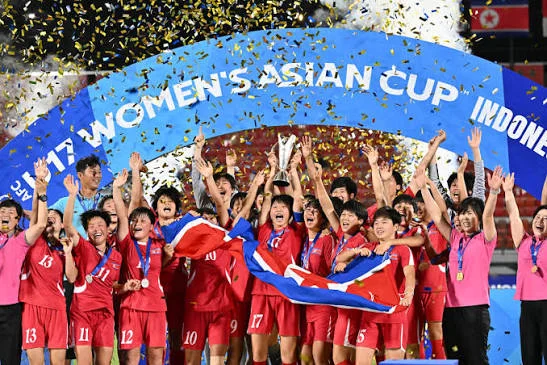
The U17 Women’s World Cup semi-finals offer a strikingly broad test of the established order: defending champions North Korea face Japan, while Brazil meet Nigeria. All four are from Asia or South America, after every European team exited before the last four. The line-up puts two familiar forces from the age group alongside teams whose routes here have supplied sharp contrasts in form and momentum.
There are two distinct questions heading into the semi-finals. Can North Korea’s record of success carry it through another knockout test, and can Nigeria repeat the disruption it caused in the group stage? Japan’s defensive record and Brazil’s recovery against China give the other tie its own tension. At this stage, a strong run matters, but the previous results don’t decide what happens next.
North Korea still sets the pace
North Korea’s 3-0 quarter-final win over the United States was emphatic. The champions fired 33 shots and forced goalkeeper Avellina Saunders to make nine saves, while Ri Ui-gyong scored twice. Those figures describe sustained pressure as well as the final score: the United States keeper had to intervene repeatedly, and North Korea still found a way to turn its attacking volume into three goals.
A high shot count doesn’t automatically guarantee control or a win, but paired with a clean sheet and a three-goal margin it makes the quarter-final performance difficult to dismiss. North Korea showed it could keep asking questions of an opponent across the match. The challenge now is to bring that pressure against Japan, a team that has given up very little so far.
The result extended a remarkable record in the age group. North Korea have won the tournament four times and are pursuing a third straight title, following their 2024 and 2025 victories. They have avoided defeat in knockout matches since 2010, excluding outcomes decided in extra time or penalties. A record like that creates a substantial expectation, but it also gives every opponent a clear measure of the task ahead.
Yet Nigeria have already shown they can disrupt that run, beating North Korea 3-1 in the group stage. It was the champions’ first defeat in normal time at the competition in almost eight years. That result gives the semi-final picture a useful complication: North Korea’s history is formidable, but Nigeria have already demonstrated that the champions can be beaten in this tournament.
Japan now face the next challenge. The 2014 winners have conceded just once in five matches, scoring 13 goals and keeping three clean sheets. They won all three group games without conceding, then beat Kenya 3-1 and Ghana 1-0 to reach their first semi-final since 2016. The path combines attacking output with a defence that has generally kept opponents at arm’s length, though the Ghana match shows that not every win has been comfortable.
This is more significant than it looks. Japan’s numbers suggest a side that can score freely, while its one-goal quarter-final win shows it can also get through a tighter contest. Against North Korea, that balance will matter: the semi-final could test whether Japan can maintain its defensive discipline when faced with the tournament’s most experienced contender.
Nigeria’s difficult route, Brazil’s late response
Nigeria have had the most demanding path of the remaining teams. After losing their opening match, they recovered to defeat Puerto Rico, North Korea, Mexico and Venezuela. Their 1-0 quarter-final victory over Venezuela secured a place in the semi-finals. The sequence is a reminder that a rough start needn’t define a tournament, especially when a team can respond with a run of wins.
The victory over North Korea carries particular weight because it’s the one result that connects Nigeria’s group-stage work directly to the semi-final stakes. But the route also includes close margins: Venezuela were beaten by a single goal. That kind of progress can build confidence, though it leaves little room to assume every match will follow the same pattern.
Brazil, meanwhile, came from behind to beat China 2-1. The win sets up a meeting with Nigeria and leaves the two sides one step from the final. Coming back from a deficit speaks to Brazil’s ability to respond under pressure, but the result also shows that the quarter-final wasn’t settled on Brazil’s terms from the start. Nigeria will have its own reasons to believe it can make this difficult.
Here’s the thing: both teams arrive with evidence of resilience, but in different forms. Nigeria recovered from an opening defeat and beat North Korea; Brazil overturned a deficit against China. Neither story guarantees an advantage. If you’re following the semi-final, the practical question is which side can impose its approach when the other has already shown it can recover from setbacks.
Europe’s exit changes the picture
UEFA sent five teams to Morocco: Germany, France, Norway, Poland and Spain. None reached the quarter-finals. Norway went out in the group stage; Germany lost to Venezuela in the round of 16, France fell to China on penalties, Poland were eliminated by Brazil, and the United States knocked out Spain.
The varied exits matter because they show there wasn’t one route by which Europe’s representatives fell short. Norway didn’t advance from the group stage, while the other listed teams were eliminated in the knockout rounds by opponents from different parts of the field. France’s defeat on penalties was especially close in its method, while Germany’s loss to Venezuela and Spain’s to the United States underline that the field’s strength wasn’t confined to the four semi-finalists.
That said, the absence of European teams from the last four is a fact about this edition, not a complete verdict on the balance of youth football. A tournament can expose weaknesses in a particular campaign without establishing a permanent shift. The semi-finalists have earned their places through the results recorded here, and their different styles and routes make the final four a useful test of the competition’s breadth.
What the semi-finals could tell us
The tournament is in the second year of FIFA’s expanded 24-team annual format. Morocco is hosting five editions, from 2025 through 2029. A larger field gives more teams a path into the competition, while the knockout rounds still leave little margin for error. The current line-up brings that tension into focus: established champions, a former winner, and sides that have reached this stage through contrasting runs.
The format’s annual schedule also gives the competition a regular place in the calendar. For young players, that means a recurring international tournament at this age level; for audiences, it creates more opportunities to see how teams develop and compete. The results here can offer clues about which squads are thriving, but a single edition can’t tell the whole story of how a national programme is progressing.
North Korea’s title defense faces Japan’s combination of scoring and defensive record, while Nigeria’s momentum is tested by Brazil’s comeback. Those are compelling match-ups because none of the teams arrives with an uncontested claim to control. And this is the part most people overlook: a semi-final isn’t simply a reward for reaching the last four. It’s a fresh test of whether a team can adapt when its opponent has studied the same results and knows what is at stake.
One more match. Then the final.
With North Korea’s title defense facing Japan and Nigeria’s momentum tested by Brazil, the semi-finals put contrasting runs of form at the center of the competition. The European teams’ early exits add context, but the next results will determine which of the four remaining sides gets the chance to compete for the title.
Contact the writer of this story, Harry Ewing, at [email protected]