A fatal collision late in Tenerife’s match
Jesus de Miguel’s death has brought a wave of tributes across Spanish football and raised immediate questions about how Tenerife’s players will be supported after Monday’s match. The 30-year-old striker died in hospital from injuries sustained in a collision during the club’s second-tier game. The loss has also shifted attention from the abandoned fixture to the people who were on the pitch and are now dealing with the death of a teammate.
That aftermath matters. In professional football, players and staff are expected to resume a demanding schedule, but a sudden death inside a match can leave a squad grieving in public while decisions about its next game are still pending. La Liga president Javier Tebas has said he plans to speak with Tenerife about whether that match should be postponed, putting the players’ welfare at the centre of the immediate discussion.
Collision during a 2-2 match
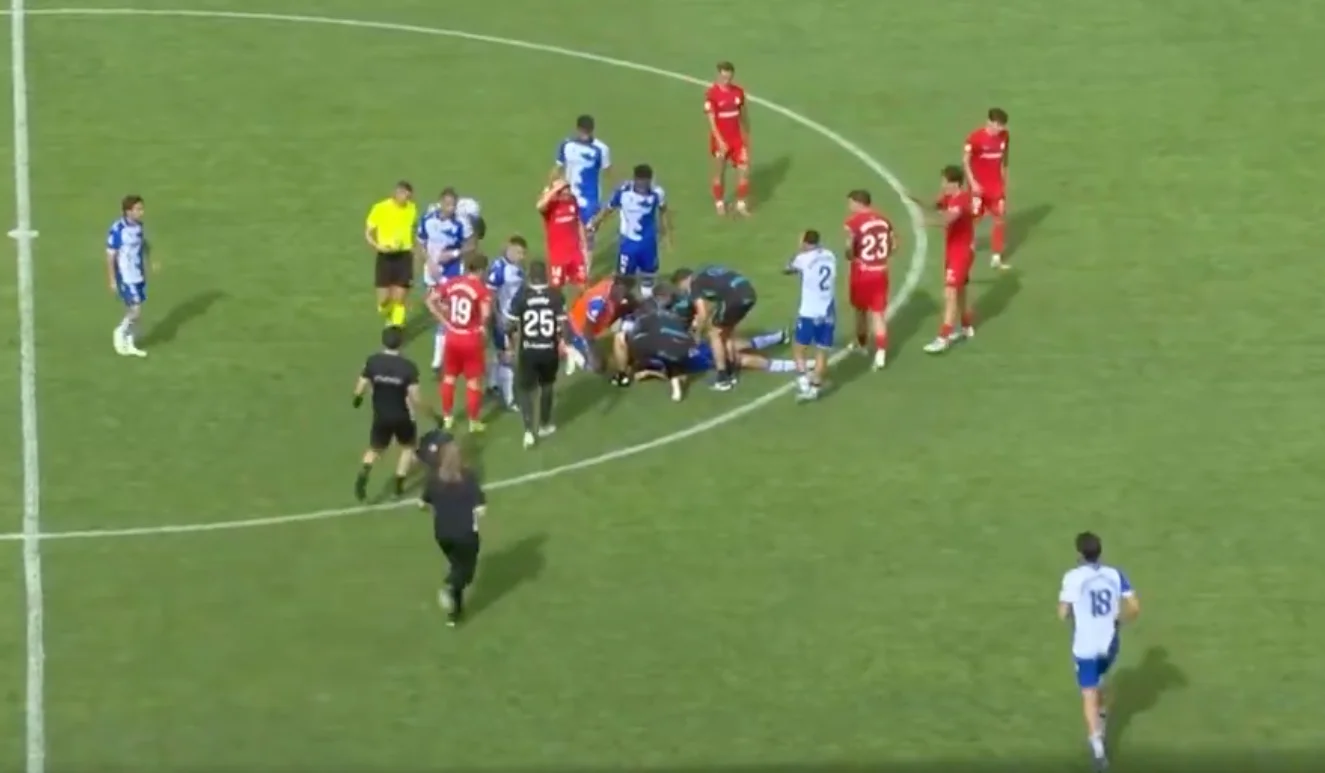
The incident came late in added time, with the score at 2-2. De Miguel was through on goal when Andorra goalkeeper Jesus Owono came out and struck him in the chest. Owono was sent off with a straight red card. The details establish the sequence of the collision, but the article provides no further account of how it occurred or of any subsequent assessment beyond the updates from Tenerife.
De Miguel appeared motionless. Players from both teams and medical staff attended to him on the pitch, where he suffered a cardiac arrest, before he was taken to Hospital Universitario de Nuestra Señora de Candelaria in Santa Cruz. The match was abandoned. The abrupt end to the game reflects the limits of sport’s usual routines: once a serious medical emergency unfolds, the result and competition schedule become secondary.
Tenerife initially said De Miguel was in intensive care and “stable, despite the severity of his condition”. The club reported early on Tuesday that his neurological condition had worsened, then announced that he had died at 8am. Those updates trace a rapid deterioration from cautious hope to devastating news, and explain why the final announcement resonated well beyond the immediate match.
Tributes from clubs and football bodies
Tenerife’s statement described the loss as devastating, saying there were “no words of comfort” and that nothing could ease the club’s sadness. The club added that it stood with De Miguel’s family, friends and the wider Tenerife football community. His family thanked people for their messages and asked for privacy, a request that sets a clear boundary amid the attention surrounding a high-profile death.
Andorra also issued a statement of condolence to De Miguel’s family, teammates and Tenerife. The Spanish Footballers’ Association said his death had left “a huge void” among those who shared his commitment to football and to the rights of fellow professionals. Messages from both clubs and the players’ association show how the loss crosses the line between opponents: the match brought the teams together in an emergency, and the response has continued through public condolences.
Barcelona, Real Madrid and other Spanish clubs paid tribute. Fifpro, the global players’ union, said it was deeply saddened and sent its thoughts to De Miguel’s family, teammates and everyone affected. The breadth of those messages reflects the way football’s institutions can make grief visible across the sport, though statements alone can’t answer what practical support people close to the incident will need.
La Liga president Javier Tebas said he was shocked by the news and that the league would work to support Tenerife and De Miguel’s family. He said he planned to speak with the club about whether its next match should be postponed, citing the welfare of the players, and raised the possibility of a joint tribute by La Liga and the Segunda Division. The question of postponement is more than a scheduling detail: it asks whether a team can be expected to compete while its members are grieving.
Uefa president Aleksander Ceferin said the organisation was heartbroken and that its thoughts were with De Miguel’s family, teammates and everyone at Tenerife. Uefa said every match this week would begin with a moment of silence in his memory. A shared tribute gives the football community a way to mark the death, even as the more immediate work of supporting the people closest to De Miguel remains with his family and club.
A key figure in Tenerife’s return
De Miguel made his professional debut for Leganes B in 2015. He joined Tenerife on a three-year contract in 2025 and helped the club secure promotion back to the Segunda Division, scoring 11 goals in 29 games. Those details give a measure of his contribution: he arrived as part of a team rebuilding its place in the second tier and played a direct role in reaching that goal.
Statistics can describe a player’s output, but they don’t capture his place in a dressing room or the shock of losing a teammate during a match. For Tenerife supporters, his promotion campaign will now be inseparable from the news of his death. And this is the part most people overlook: a player’s public career is only one part of the loss being mourned by those who knew him day to day.
Support after the tributes
The club and its players now face the loss of a teammate who had helped shape that return. The immediate focus, as the tributes make clear, is on supporting his family and the Tenerife community as they mourn. The next match decision will offer one early indication of how the club and league weigh competitive commitments against the needs of the people affected.
Here’s the thing: the public response has been swift, but condolences and a moment of silence are only the visible part of a difficult period. A squad may need time and space to grieve, while individual players can respond differently to the same event. If you’re working in this space, the question is whether support continues after the cameras move on and the schedule resumes. That work is less visible. It may matter more in the days ahead.
This is more significant than it looks. De Miguel’s death has prompted football to confront, in practical terms, what a club owes its players and staff when a match ends in tragedy. The article offers no answer about what Tenerife will decide or what further support will look like, but it makes clear where the next questions lie: how the team is cared for, how the family’s privacy is respected, and how the club remembers a striker whose goals helped bring it back to the Segunda Division.