Arsène Wenger’s proposed offside change delivered fewer whistles in the Canadian Premier League, but it also reshaped defending. That trade-off appears to have left IFAB’s technical panels unconvinced, making a further trial unlikely ahead of possible law changes for 2027/28. The experiment illustrates the difficulty of judging a rule by one outcome: fewer marginal calls may sound like a straightforward improvement, yet teams respond to the new incentives in ways that reach beyond the original decision.
Fewer calls, deeper defensive lines
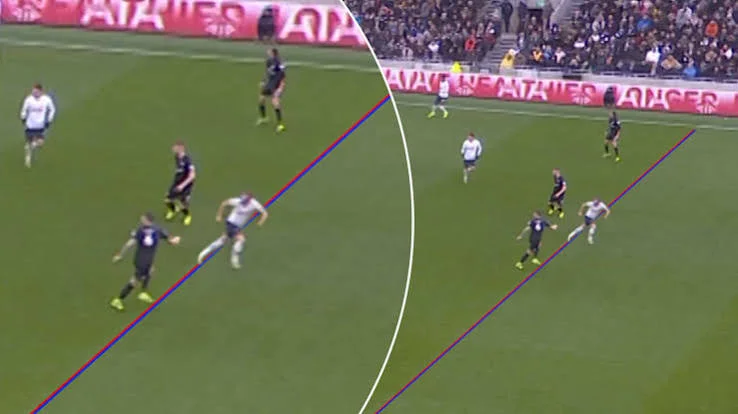
The CPL tested Wenger’s “daylight” rule across the 2026 season. Under the proposal, an attacker would stay onside if any part of their body was level with the second-last defender. That changes the threshold at the heart of the rule: instead of a small advantage in body position being enough to call a player offside, attackers could remain eligible when level with the defender.
The numbers show the change had a clear effect on officiating: offside decisions fell by 54%, and the trial produced an estimated 13 additional goals in 112 matches. Those figures point in the direction supporters of the change might want: fewer stoppages over tight decisions and more scoring. But the added goals were an estimate, and neither measure captures the full effect on how teams approached the game.
Teams adjusted by dropping their defensive lines an average of three metres over the season. That response makes tactical sense: if attackers can remain onside when level with a defender, holding a high line becomes riskier. Defenders have more reason to retreat and protect the space behind them, even when doing so gives opponents more room to build attacks. This is more significant than it looks. A rule designed to reduce marginal calls can alter the positions teams choose before any offside decision arises.
That shift was especially pronounced at set-pieces, where the proposal gave attackers more room and forced defenders to retreat. It altered phases of play that often hinge on a coordinated defensive line. Here's the thing: reducing marginal offside calls came with a broader tactical cost. For coaches, the question isn’t only whether a borderline decision disappears; it’s whether the rule changes the shape of a team’s defence throughout the match.
Support tools shaped the trial
The CPL also tested Football Video Support, a simplified VAR alternative that gives coaches two challenges per match. It helped officials handle some disputes during the offside experiment, but most leagues don’t have access to that system. That limits how easily the trial’s experience can be carried over to competitions with different tools for reviewing decisions.
Video support matters because a rule’s practical effect depends partly on how officials apply it and how teams can challenge close calls. A system that gives coaches a limited number of challenges may help resolve particular disputes, while also making review access part of the experiment. The available account doesn’t establish how much that changed the results, but it’s a factor IFAB would need to weigh when considering evidence from the CPL.
When the trial began in April, CPL commissioner James Johnson said Canada could put the league “at the forefront of innovation” and help shape football’s laws. The season provided evidence for IFAB to assess, though it hasn’t strengthened the case for Wenger’s proposal. A full season is a useful test of how teams adapt, but the findings still describe one competition operating with a particular support system.
Other trials draw a warmer response
IFAB’s football and technical advisory panels, which include former players, coaches and referees, gave the offside proposal little support at Tuesday’s meetings. Other ideas received a more favourable reception. One would change the penalty-shootout coin toss so the winning captain chooses either the end or whether to take the first kick, rather than potentially gaining both advantages. The contrast suggests the panels were more receptive to a change aimed at how a procedure allocates choice than to an offside revision with wider tactical consequences.
A goalkeeper-injury trial in England was also viewed positively. It requires an outfield player to leave the pitch when a goalkeeper receives treatment, aiming to deter tactical stoppages presented as injuries. The measure has been enforced twice in 80 Premier League matches so far. That count shows the rule has been applied, though it doesn’t by itself establish whether the threat of enforcement has changed player behaviour.
What the trial means for future law changes
The CPL trial gave IFAB a full season of evidence, and the defensive adjustment now sits alongside the drop in offside calls and rise in goals. Those effects belong in the same assessment. Counting whistles and goals alone would miss how teams adapted; focusing only on defensive lines would miss the outcomes the proposal was meant to change. And yet, the observed shift is a serious complication for a reform that aims to make play flow more freely.
If you're working in this space, the practical question is whether a law can reduce close offside decisions without encouraging teams to defend deeper. Similar rule changes often prompt tactical responses that are hard to predict from the wording alone, so a trial’s value lies partly in revealing those responses. The available evidence points to a clear trade-off, but it doesn’t settle whether the benefits outweigh the tactical cost. More debate, fewer easy answers.
Wenger’s proposal looks unlikely to advance; the key question for future law changes is whether reducing marginal decisions can be done without changing how teams defend so substantially. Any further assessment would have to account for both sides of that balance, as well as the support tools available in the competitions being studied. That said, a lower number of offside calls isn’t, by itself, proof that the game has improved.
Contact the writer of this story, Harry Ewing, at [email protected]