A resignation turns disagreement into a public break
Takeshi Okada’s resignation from the Japan Football Association puts a senior Japanese football figure on record against the Asian Football Confederation’s decision to back Gianni Infantino for another term as FIFA president. The split is about more than one endorsement: it exposes the tension between a national association’s own judgment and the voting position of its regional confederation. It also adds a visible challenge to FIFA’s governance at a moment when support for its president is being assembled across the world’s football bodies.
Okada cites a clash of convictions
The JFA confirmed Okada’s resignation on Wednesday, 29 October. He’d left the vice presidency the previous weekend, after the AFC declared its support for Infantino ahead of FIFA’s next presidential election. The sequence makes the endorsement the immediate backdrop to his departure, though the JFA’s statement also points to a broader conflict of principle.
Okada, who coached Japan at the 1998 and 2010 World Cups, acknowledged that there were “practical reasons for aligning with the AFC’s stance.” But he said sport should reflect integrity, and described events surrounding this year’s World Cup as a “significant divergence” from his personal convictions. “As a sportsman, I cannot accept this,” he said in the JFA statement. His words leave the underlying events unspecified, so the statement doesn’t settle what, precisely, he considers unacceptable.
That restraint matters. Okada’s resignation is a clear act of dissent, but it isn’t a detailed case against the AFC or FIFA. His standing in Japanese football gives the decision public weight; his statement, however, offers no account of the internal discussions or practical considerations he acknowledged. The break is unmistakable. The full argument behind it is less so.
His departure turns that disagreement into a public break with the association’s regional alignment. The AFC had previously supported UEFA and Concacaf in their criticism of Infantino’s FIFA Forward Enterprise project and his plans to sell off parts of FIFA’s business. That earlier opposition makes the confederation’s current endorsement harder to read as simple continuity. The shift raises a basic question: what changed in the balance between policy concerns and the pull of a regional voting bloc?
Asian support carries weight
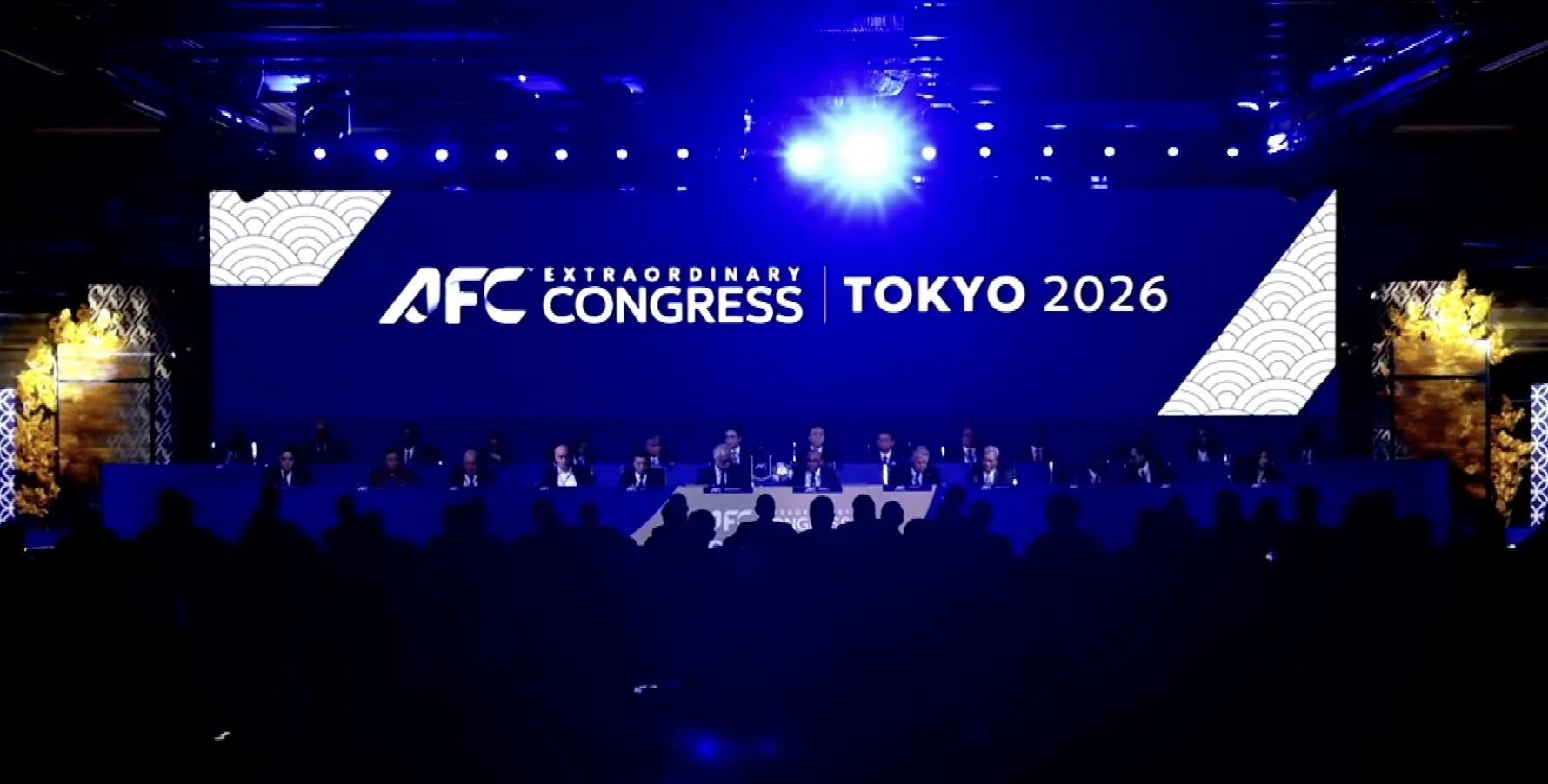
The AFC’s endorsement was announced last week by its president, Sheikh Salman bin Ibrahim Al Khalifa. The confederation controls 46 of the 211 votes in FIFA’s presidential election, scheduled for the organisation’s annual congress in Rabat, Morocco, in March. Candidates have until 18 November to confirm they’re running. Those figures make the AFC’s position politically significant, even before individual associations’ votes are counted.
Qatar and Saudi Arabia, hosts of the 2022 and 2034 World Cups respectively, backed Infantino. The two Gulf states have significant influence within the AFC and provide sponsorship to the confederation. The article reports that they pressed the AFC to endorse him. Saudi Arabia had initially declined to offer public support. Taken together, these details suggest that the endorsement reflects a contest over influence as well as a formal choice about FIFA’s leadership.
Other Asian associations, including Sri Lanka, Mongolia and Bhutan, were also expected to support Infantino. The AFC’s backing adds to an already substantial base: the Confederation of African Football, with 54 votes, has also pledged its support. Yet a confederation’s endorsement doesn’t automatically show how secure that support is among all its members. The public commitments matter, but so does whether associations continue to see a reason to stand behind them.
That commitment may face pressure after FIFA declined to intervene over Congo fielding ineligible players during qualification, a decision that disadvantaged other African associations. Nigeria, which lost a qualification play-off to Congo on penalties, was among the affected teams. The episode gives African associations a concrete grievance to weigh against their confederation’s pledge. It doesn’t establish how any of them will vote, but it shows why a bloc’s support can carry political costs inside the bloc itself.
Questions over FIFA’s process
Infantino’s support hasn’t quieted debate over FIFA’s plans and decision-making. At a FIFA Council meeting in Zurich two weeks ago, European officials questioned him about privatisation proposals and governance. He didn’t answer in the meeting, saying he’d respond fully after receiving the questions in writing. That exchange leaves the substance of the answers unresolved, while showing that senior officials want more explanation of the proposals.
Pressure from UEFA president Aleksander Ceferin and Concacaf president Victor Montagliani also preceded a rise in proposed development funding for the next four-year cycle, from $10 million to $25 million. The FIFA Council approved the proposal in Zurich. The increase shows that criticism can coincide with a change in FIFA’s plans, though the available account doesn’t establish that the pressure alone caused the revision. It’s a reminder that governance disputes often turn on both the process used to make decisions and the benefits associations expect to receive.
Jordan Football Association president Prince Ali bin Al Hussein challenged the AFC’s process, describing its extraordinary congress as “pure politics at the behest of Gianni Infantino.” In a post on X, he disputed claims that Asia had reached a united position, saying participants hadn’t been allowed to speak, debate or address the media. He added that coercion, threats or bribes shouldn’t be permitted. His criticism targets the credibility of the endorsement: a declared consensus is less persuasive if members say they weren’t given room to contest it.
The AFC rejected what it called unsupported allegations of coercion, threats or bribery. Prince Ali later said his remarks affirmed a general principle and weren’t an accusation against any individual. The competing accounts don’t resolve how the congress was conducted, but they do make the process itself part of the election story. (And this is the part most people overlook.) Support counts can look settled while questions about how that support was gathered remain open.
The test ahead is credibility
With the election approaching, Okada’s resignation and Prince Ali’s criticism leave the AFC’s endorsement facing a visible test of unity and credibility. The 46 votes attached to the confederation give its position weight, but the public dispute shows why vote totals alone won’t tell the whole story. If you’re working in this space, the key question is whether associations continue to accept the AFC’s line as their own. This is more significant than it looks: a regional endorsement can strengthen a candidate while also exposing disagreements over how football’s governing bodies reach decisions.
For now, the known facts point to competing pressures rather than a settled verdict on the election. FIFA’s funding proposal has changed, questions about its business plans remain, and the AFC has defended its endorsement against allegations its president rejects. Okada’s decision gives those arguments a human and institutional cost. The next measure will be whether the confederation’s show of unity holds when members cast their votes.
A visible split. A vote bloc under scrutiny.
Contact the writer of this story, Samindra Kunti, at [email protected]