Manchester United’s captaincy problem says as much about the squad as it does about Bruno Fernandes. Michael Carrick has kept the armband with a player whose form and temperament can frustrate, because the alternatives offer little reason to believe they could lead the team more effectively. For a club trying to recover after eight games without a win, that shortage looks like a deeper problem than one uneasy relationship.
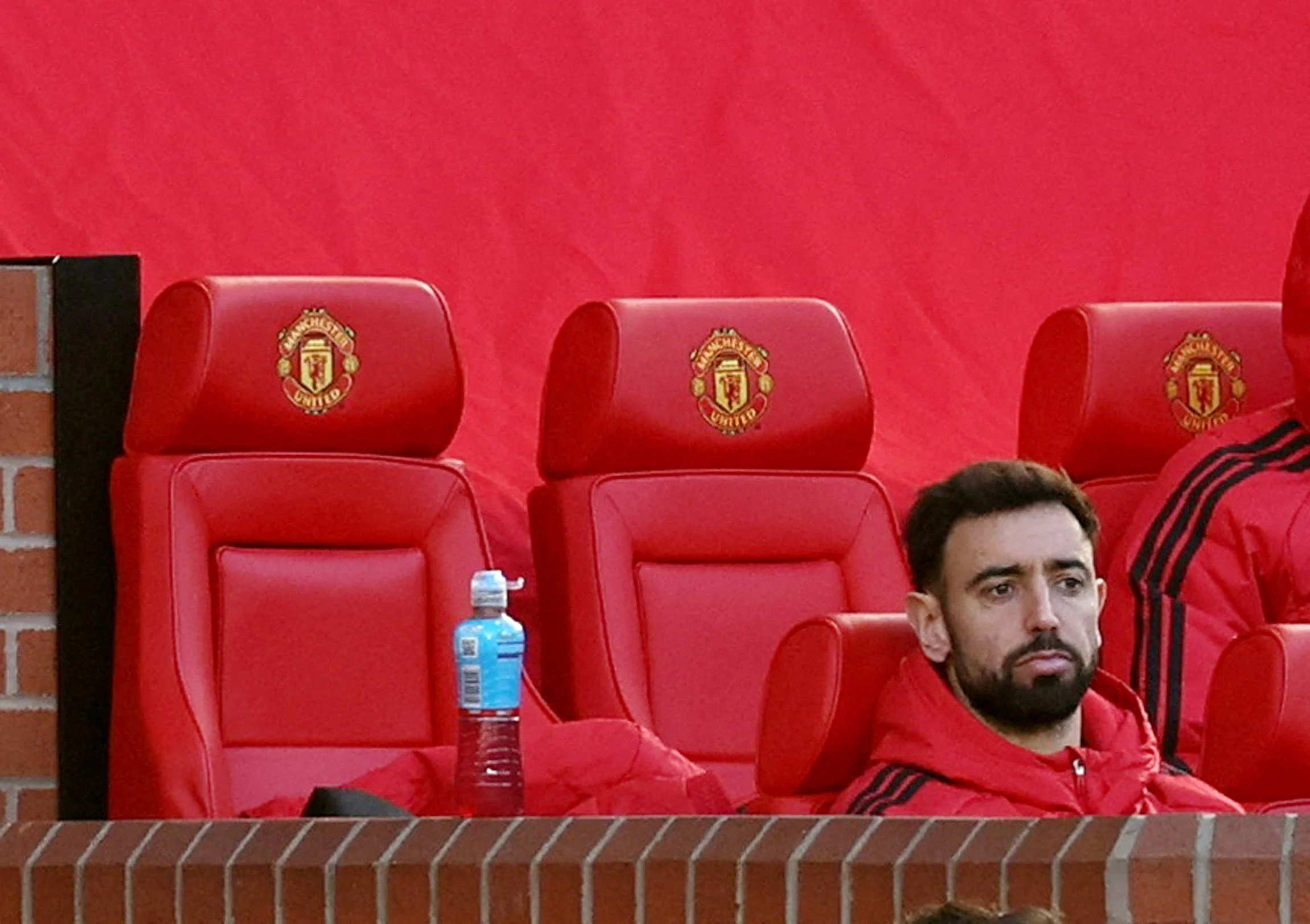
Carrick and Fernandes held talks at United’s Carrington training ground this week after tensions appeared to surface. Fernandes was left out of the defeat to Bournemouth, then watched several substitutes come on ahead of him. Yet Carrick said there was “no decision to be made” about the captaincy. Fernandes is back in the squad for Saturday’s trip to Chelsea, and his absence may last only one game.
A captain Carrick can’t afford to lose
The manager’s public explanation was clear: “He's fully committed to this football club, he's fully committed to making things better.” Carrick also described Fernandes as the player who had “led the team so well for many a game and many a year”. Those remarks sound like a vote of confidence, but they also point to a practical calculation. Fernandes remains United’s most plausible source of a decisive moment against Chelsea, Roma on Tuesday or Aston Villa next Sunday.
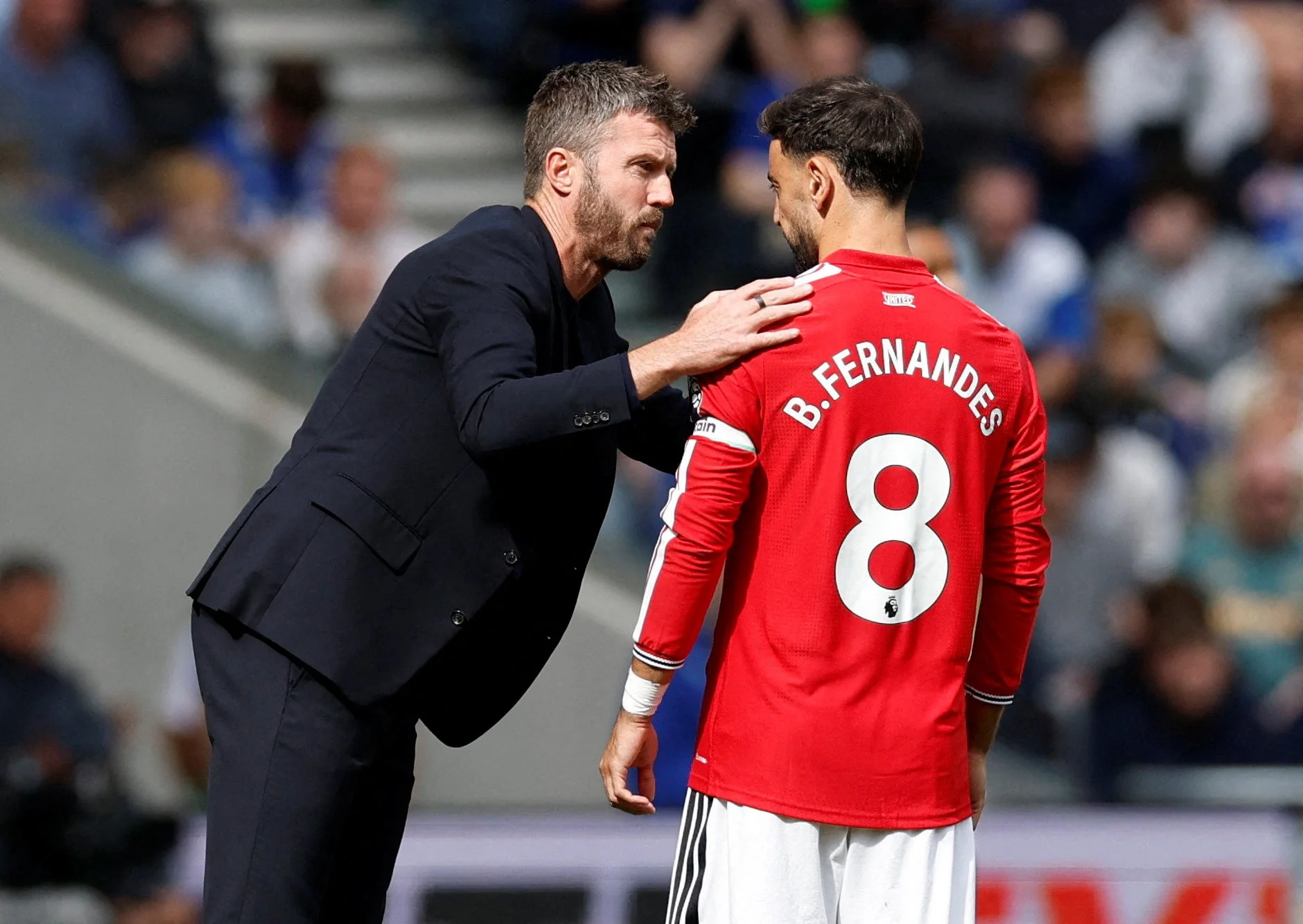
That dependence puts Carrick in a bind. Fernandes can be brilliant, but his emotional intensity doesn’t always help a struggling side. His gestures and his tendency to criticise teammates have drawn complaints, including from Roy Keane. The captain and manager also have contrasting styles: Carrick is measured, while Fernandes brings visible urgency and, at times, drama. Their earlier partnership worked well, with Fernandes setting the Premier League record for assists in a season through his performances under Carrick. Now Carrick needs that partnership to help steady United—and perhaps his own position at Old Trafford.
Keeping the armband doesn’t erase the friction. It reflects how hard it would be to replace Fernandes as a leader and a match-winner at the same time. Carrick’s appeal for the squad to pull together carries extra weight after eight winless games, but togetherness is difficult to manufacture if the team lacks players who can turn it into results.
Few convincing alternatives
Against Bournemouth, the armband went to Harry Maguire, a loyal United player whose own performances have not made him an automatic choice. Ole Gunnar Solskjaer promoted him to captain while Carrick was on the coaching staff; Erik ten Hag later removed him from the role. That history leaves Maguire available, but not an obvious answer to the team’s leadership needs.
Lisandro Martinez captained United late in Ruben Amorim’s tenure when Fernandes was injured. But he recently criticised sporting director Jason Wilcox in a post-match interview—another public exchange the club might have preferred to avoid. His leadership record, in other words, comes with its own complications.
Amorim’s six-man leadership group included Tom Heaton, Diogo Dalot and Noussair Mazraoui. Heaton is respected, but he’s a third-choice goalkeeper whose most recent Premier League appearance came on New Year’s Day in 2020. Dalot has kept Mazraoui out of the side, yet his performances this season have not made a persuasive case for captaincy.
Youri Tielemans offers another example of the thin bench of leaders. He captains Belgium and has quality, but he led United in only his sixth appearance for the club, in a Carabao Cup defeat to Brighton. He started ahead of Fernandes against Bournemouth and was substituted at half-time. A lack of mobility also makes it harder for him to set the team’s tempo through his play. Carrick has reasons to leave him out at Stamford Bridge.
The cost of a thin leadership group
Luke Shaw and Marcus Rashford might otherwise have entered the conversation as two of United’s longest-serving players. Neither was considered for the captaincy, even before both were sidelined recently. That omission reinforces the impression that the club has struggled to build a group of dependable leaders around Fernandes.
That criticism has sometimes landed on Carrick, who can appear too passive. Fernandes is the opposite: vocal, reactive and difficult to ignore. But a captain’s forceful manner can only take a team so far. United have looked lacklustre both with him and without him, so the burden cannot rest on his personality alone.
Fernandes has stayed at Old Trafford despite opportunities to leave and the prospect of earning more in the Saudi Pro League. His time at United has brought recognition, including a Footballer of the Year award, but staying has also appeared thankless as the club has struggled. Those years of commitment help explain Carrick’s trust. They also leave United increasingly reliant on a player whose relationship with the manager has recently looked strained.
Carrick once worked under Alex Ferguson, whose handling of Roy Keane showed how ruthlessly United could resolve a captaincy dispute. Keane made critical comments in an interview and never played for the club again. Carrick has chosen a different course with Fernandes, apparently hoping the manager and captain can repair their working relationship rather than make a public break.
Removing Fernandes as captain might be possible for a few matches, but it would leave United needing someone else to take over—and there’s little evidence that another candidate is ready. Carrick’s choice therefore looks less like an endorsement of every part of Fernandes’ conduct than an acknowledgement of the squad’s limits. If United are to change direction, they need their captain to help deliver results while the club finds more leaders who can share the responsibility.