A major endorsement after a public dispute
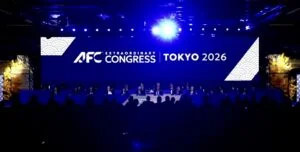
The Asian Football Confederation has pledged support for Gianni Infantino’s bid for a fourth term as FIFA president, giving the embattled leader backing from Asia. AFC president Shaikh Salman bin Ibrahim Al Khalifa announced the position on October 23. The statement matters because it turns a recent public challenge to Infantino into an endorsement, at least for now. It also gives the FIFA president a visible show of support from one of the sport’s major regional confederations.
The endorsement marks a shift from the AFC’s earlier call for Infantino’s removal. The dispute followed his failure to explain an attempt to sell all of FIFA’s commercial rights through the FFE scheme. Infantino apologized at last week’s FIFA Council meeting and said he would answer questions about the plan and growing dissatisfaction with his leadership. That promised response will test whether his new support can hold.
Why the FFE dispute carries weight
Commercial rights are central to how a global sports body packages and sells its business. They can cover a range of assets and activities, and proposals to bring them together in one sale can raise questions about who controls the process, what exactly is being offered, and how the organization accounts for the outcome. The source identifies an attempt to sell all of FIFA’s commercial rights through the FFE scheme, but doesn’t explain the scheme’s structure or terms. Those details matter: without them, readers can’t assess the proposal’s practical reach or the specific objections it triggered.
Still, the reported failure to explain the attempt is itself a governance problem. A major commercial plan needs a clear account of its purpose, scope, and decision-making path, especially when leaders and member organizations disagree about it. An apology may acknowledge that the handling fell short. It doesn’t, on its own, answer the questions that produced the dispute.
Here’s the thing: the argument concerns more than a single commercial proposal. It also tests how FIFA’s leadership handles scrutiny from within the football system. When a confederation calls for a president’s removal and later backs his next term, people are entitled to ask what changed. The announcement establishes the new position; it doesn’t, by itself, explain the reversal.
What the AFC’s support signals
For a president seeking another term, support from a confederation can be politically useful. It shows that the leader has backing among at least some of the organizations that make up international football’s governing structure. But a public endorsement isn’t the same as a settled consensus. The source says the AFC has pledged support; it doesn’t say that every member association shares that position or that other confederations have made the same commitment.
The shift also makes the timing significant. The AFC’s earlier call for Infantino’s removal and its later endorsement point in different directions, while the unresolved questions about FFE remain part of the story. That creates a test for both sides: Infantino must provide the promised answers, and the AFC’s leaders may have to explain why they now consider backing his bid appropriate.
This is more significant than it looks. In sports governance, public statements can shape perceptions of a leader’s standing even when they don’t settle the underlying disagreement. Support can signal confidence, pragmatism, or a decision to keep working with an incumbent; the source doesn’t specify which reasoning drove the AFC’s announcement. Readers should resist treating the endorsement as proof that concerns have been resolved.
The leadership question beyond one proposal
The report links the commercial-rights dispute to growing dissatisfaction with Infantino’s leadership. That wider concern is harder to evaluate from the available information, because no examples of that dissatisfaction are given. Even so, its presence changes the stakes. A response focused narrowly on FFE may not address broader criticism, while a general promise to answer questions will need enough detail to satisfy those who raised them.
Infantino’s apology at the FIFA Council meeting is a meaningful step in the sequence described, but it’s only a beginning. The next measure is whether he follows through with answers that explain what was attempted and how the plan was handled. Clarity could help distinguish a dispute over communication from a deeper disagreement about authority and accountability. Without a substantive response, the apology and the AFC endorsement may amount to political gestures that leave the central issue untouched.
(And this is the part most people overlook.) An endorsement can reduce the appearance of isolation while leaving the underlying questions intact. The support may help Infantino present his bid as viable, yet the durability of that support depends in part on what happens next. The source offers no detail about the AFC’s conditions, if any, so the announcement shouldn’t be read as a guarantee of lasting backing.
What to watch next
The immediate point to watch is the response Infantino promised at the Council meeting: whether he addresses the FFE plan and the dissatisfaction with his leadership directly. The source doesn’t report what those answers will contain, or when they’ll be given beyond the stated expectation that he would respond. Until then, any judgment about whether the dispute is settled is premature.
If you're working in this space, the useful distinction is between support for a candidate and confidence in the way a specific proposal was handled. The AFC has made its position on Infantino’s bid clear. The record described here still leaves the commercial plan unexplained and the reason for the AFC’s shift unstated. That gap is where the next phase of the story sits.
For now, the endorsement gives Infantino a political lift, while the promised answers remain the harder test. The numbers here are underwhelming: this account supplies no vote count, terms of the FFE scheme, or explanation for the AFC’s reversal. A signal of support, then. The substance still has to follow.
The post Bad hair day for Asians, good one for Infantino as AFC backs him for another term as FIFA president appeared first on Inside World Football.