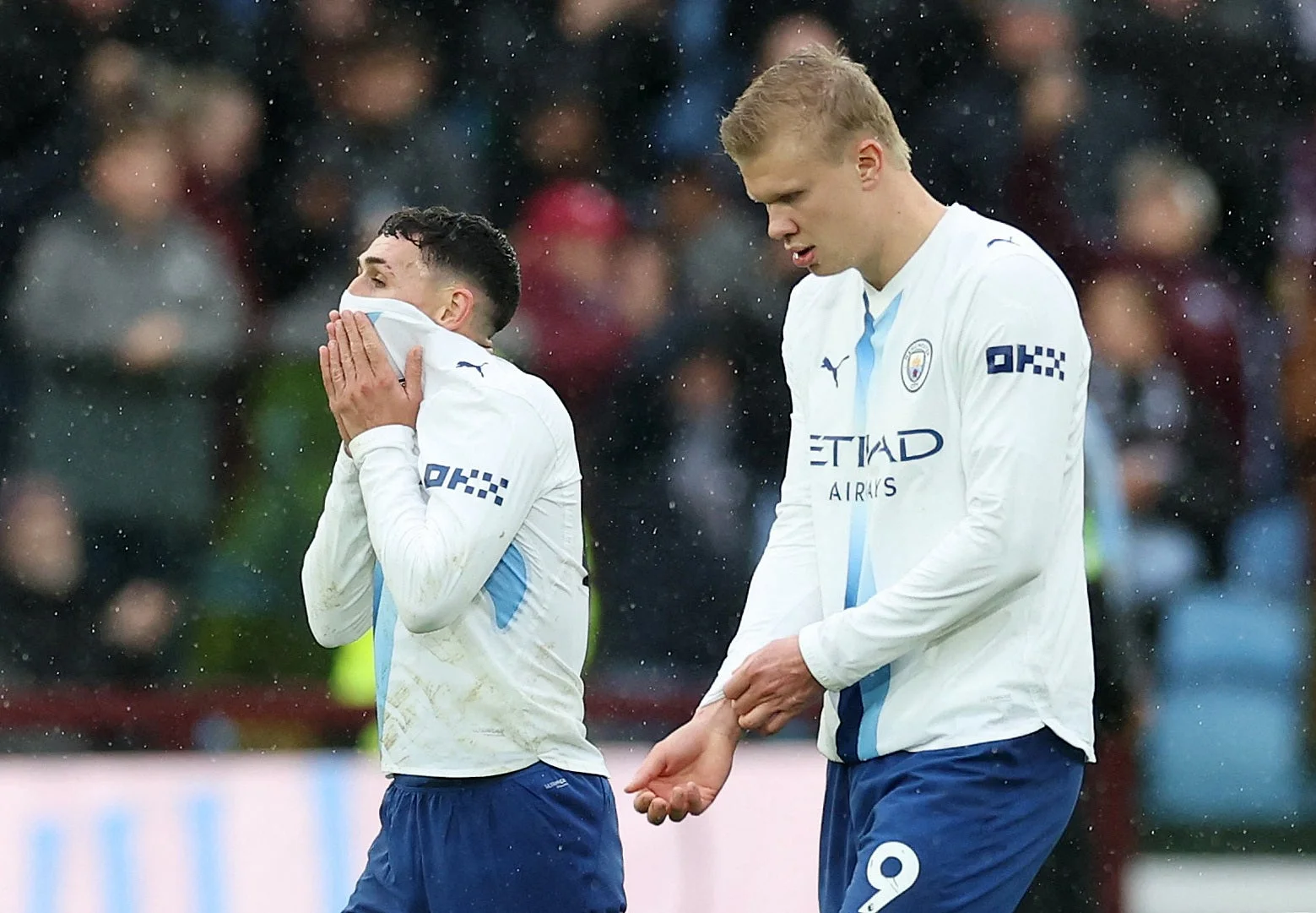
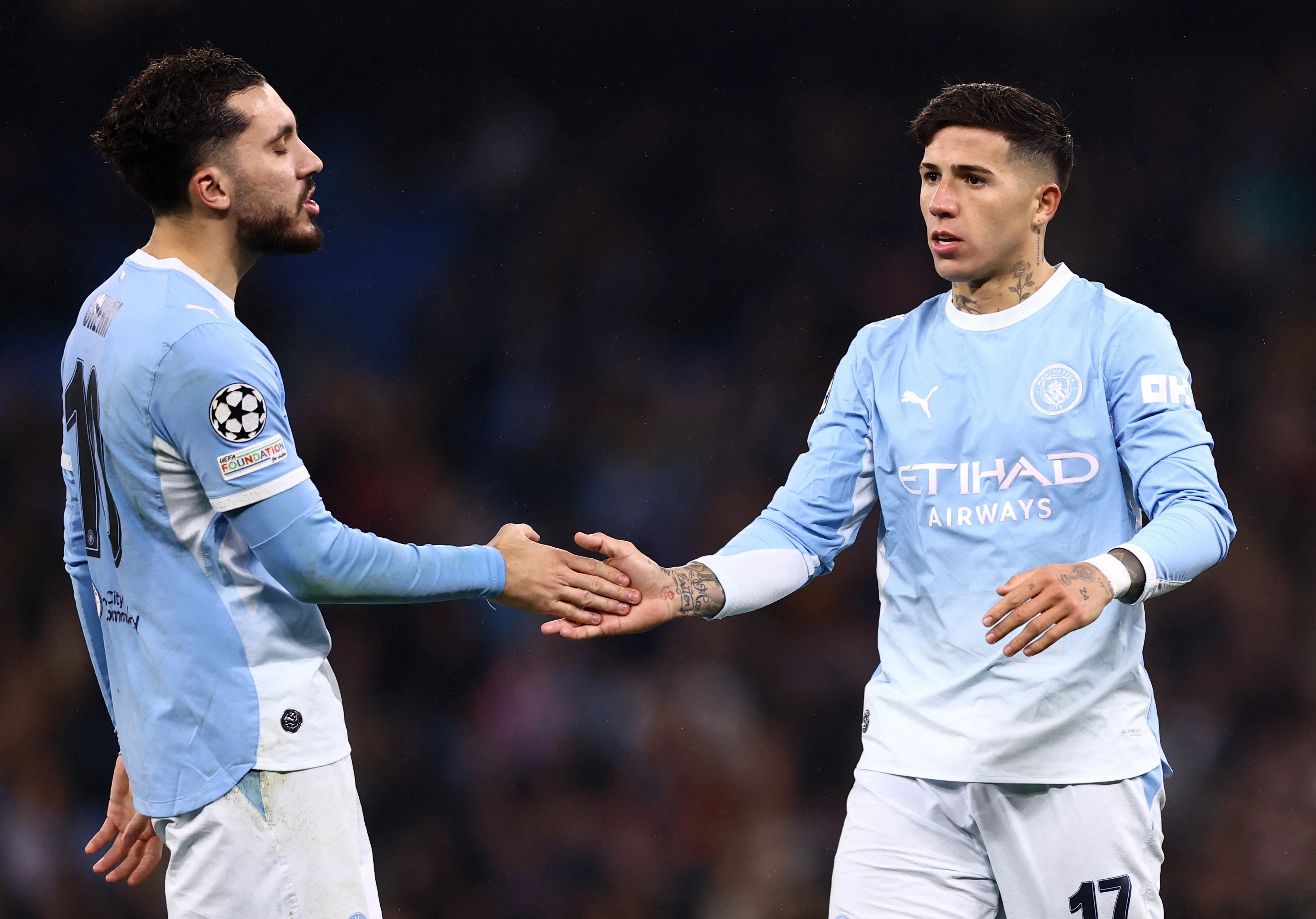
Manchester City’s 2-1 defeat at Aston Villa brought a more uncomfortable question into focus than whether their unbeaten Premier League start could last: how much of their early success was masking problems that opponents can exploit? The loss exposed uncertainty in midfield, repeated defensive errors and a thin supply of cover for key players. Those issues matter more as City face stronger opposition.
The setback also narrowed the gap at the top. City and Arsenal were level on points after the match, separated only by goal difference. That position leaves little room for a run of dropped points, particularly if City’s difficulties against high-quality sides persist. Their record start under Enzo Maresca—seven wins from his first seven league matches in charge—had suggested a team quickly finding its rhythm. Villa showed that the picture was less settled than the winning run implied.
Early results offered an incomplete picture
City’s victories included wins at Anfield and Old Trafford, substantial results that can support the case for them as the country’s leading side. But the broader record gives a more qualified reading. Aside from Liverpool, the teams they had beaten began the weekend in the lower half of the table. Several of those matches were decided by a single goal, including games against promoted clubs Coventry and Ipswich and a Bournemouth side that had made a slow start.
That distinction isn’t a dismissal of City’s results. It does, however, make their coming fixtures a more useful measure of their level. Their defeats in all competitions—to Arsenal in the Community Shield, Paris Saint-Germain and Villa—have come against strong opponents. Brighton, whom City are due to meet twice in a week, and a November trip to Arsenal offer further tests of whether the team can control matches when the opposition can punish lapses.
The Villa match suggested those lapses weren’t isolated. City have conceded dangerous opportunities in transition, a vulnerability that has troubled Pep Guardiola’s teams before. Under Maresca, the central areas can look especially exposed when the midfield lacks a second player to protect the defence. Rodri and Bernardo Silva have left, and Elliot Anderson has at times been asked to hold the centre on his own. Against a quick Villa side, that arrangement left little margin for error.
Maresca may have needed a more defensive partner for Anderson from the start. Ayyoub Bouaddi, a natural fit for that role, was an option for one of the hardest away matches on the schedule. The decision reflects a wider challenge: Maresca is still working out how to balance City’s midfield without blunting its attacking threat. Enzo Fernandez’s position remains part of that calculation.
Defensive errors are adding to the strain
The problems extend beyond shape. City’s defensive performances have been uneven, with mistakes costing them against Villa and elsewhere. Gianluigi Donnarumma was at fault for Nicolas Jackson’s second goal in the Villa match. Marc Guehi was implicated in the opener, following two errors against Ipswich the previous week. Ruben Dias struggled against Sunderland’s Brian Brobbey, while Abdukodir Khusanov’s displays have varied.
Other matches had already hinted at the risk. Brobbey scored a hat-trick at the Etihad Stadium, and Donnarumma had to make important saves to secure a win over Coventry. That record makes it harder to treat Villa’s goals as an isolated bad afternoon. City have defenders capable of improving, but until their errors become less frequent, even a well-designed attack can be undermined by moments at the other end.
The back line’s composition is another open question. Maresca used four central defenders against Villa, but that selection didn’t provide the security he needed. His preferred balance appears to involve three players who are centre-backs by trade, with Matheus Nunes filling in on the right or Nico O’Reilly on the left. That setup may give City a clearer defensive base while preserving width, but the Villa defeat showed that personnel and positioning still need to work together.
There are also signs of friction in attack. Maresca has taken Rayan Cherki off at half-time four times, suggesting he is still weighing the creative midfielder’s freedom against the team’s need for control. At Villa Park, the manager said Cherki’s booking played a part in his substitution. The episode alone doesn’t settle what role Cherki should have, but the repeated early changes show that City’s attacking combinations aren’t yet fixed.
Haaland’s importance leaves little cover
Squad depth could become the most direct constraint. City entered the 2024-25 campaign without a like-for-like replacement for Rodri or Erling Haaland, and Rodri then suffered a cruciate ligament injury. Haaland remains the only specialist striker, while Antoine Semenyo—the player positioned to deputise—has also been injured. City’s reliance on the Norwegian is reflected in the points calculation: without his goals, they would have nine fewer points.
That figure makes Haaland’s scoring central to the title race, but it also points to a narrow margin for disruption. If he misses time or has a quieter spell, City have limited cover at centre-forward. In midfield, the absence of a settled defensive partnership can leave the back line exposed. Neither issue guarantees a downturn; together, they make it harder for the team to absorb injuries, poor form or a difficult run of fixtures.
There’s a psychological dimension, too. City responded to the period’s pressure with a commanding 3-0 win at Anfield, their strongest half-hour of league football to that point. A forceful response can galvanise a side, but maintaining that intensity over a full season is a different task. The Villa loss will test whether City can turn adversity into a sustained improvement rather than a short burst of momentum.
The title picture remains open, and one defeat doesn’t decide it. But City’s next matches will reveal more than their place in the table: they will show whether Maresca can protect the midfield, settle the defence and find workable cover for Haaland. Until those questions have convincing answers, City’s early wins look less like proof of control and more like points earned while important weaknesses were still easy to miss.