A walk-off puts the tournament’s response under scrutiny
The abandonment of England’s Under-15 World Cup match against the Republic of Ireland has put the tournament’s response to a racism allegation in focus. England’s players left the field after a confrontation between an English player and an Irish opponent, with Ireland leading 4-1 in Azerbaijan. The available account establishes that play stopped and the referee abandoned the match; it doesn’t establish what was said during the confrontation or whether the allegation has been substantiated.
That distinction matters. A walk-off is a visible response to an incident, but it doesn’t settle the underlying facts. Those will have to be assessed through the reports being gathered by officials and, if referred, by Fifa’s independent disciplinary committee. Until then, the score and the players’ departure describe what happened on the pitch, not a finding about responsibility.
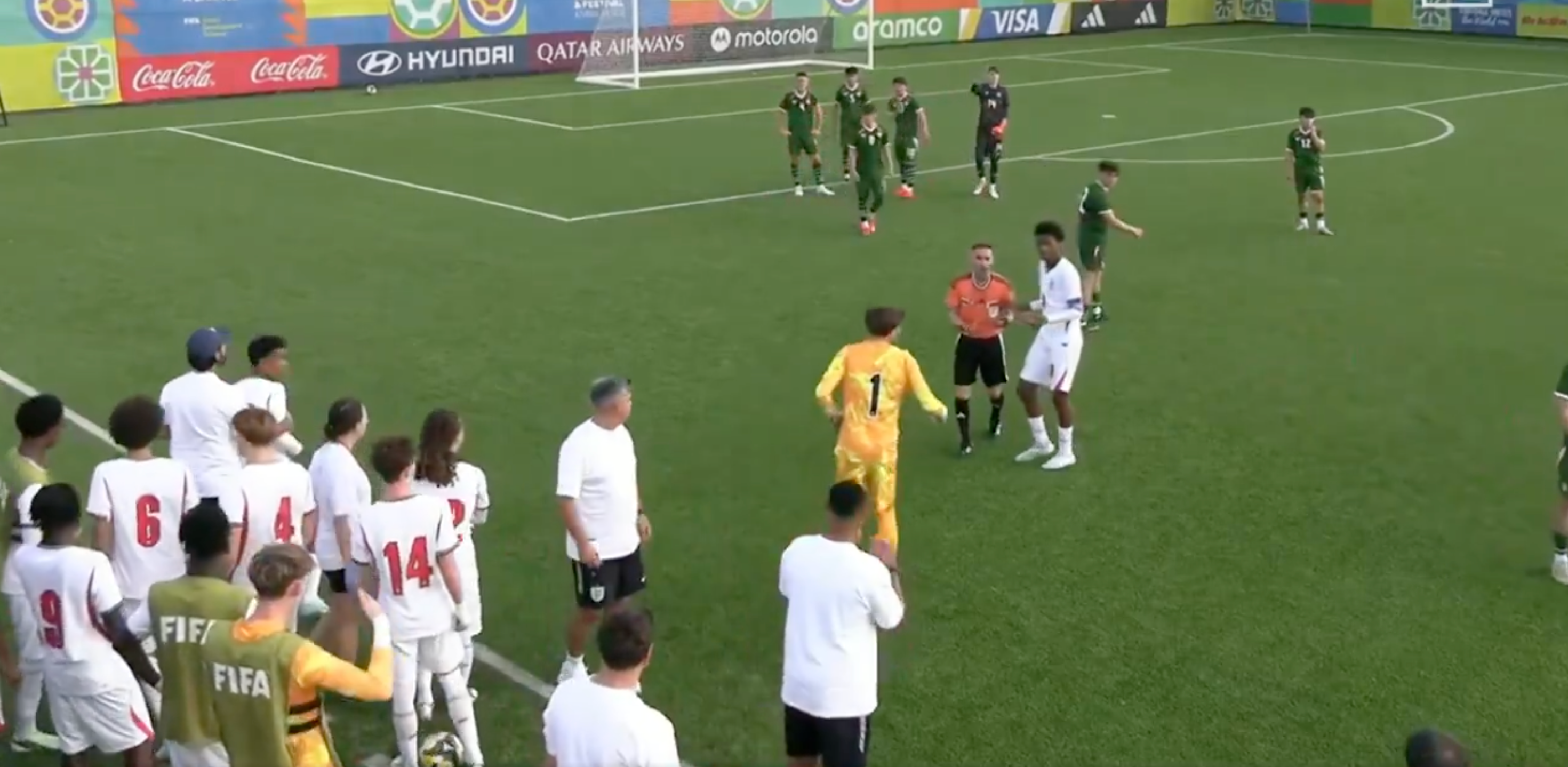
Social media footage appears to show England coach Matt Thorpe calling his team toward the touchline. He can be heard saying, “It’s not happening.” The coaching teams also appeared to exchange words before play stopped. The footage offers a glimpse of the moments around the stoppage, but it can’t by itself explain the full exchange between the players or establish what prompted the allegation.
That limitation is easy to lose in the speed of social media. A short clip can show a reaction without supplying everything that came before it, and commentary around it can get ahead of the evidence. The next account from the match officials and the teams will matter more than assumptions drawn from a few seconds of footage.
What Fifa has said so far
Fifa said it was aware of the incident at the tournament, which it describes as the Under-15 World Cup and Festival. A spokesperson said the referee abandoned the match after England refused to continue. Officials are gathering reports before referring the matter to Fifa’s independent disciplinary committee, which will decide what happens next.
That sequence leaves the central questions open. The reports may help establish what was reported during the match, how the referee responded and why play could not resume. The committee’s role, as described by Fifa, is to consider the matter and determine the next step. No outcome has been announced, and there’s no basis yet for treating the allegation as either proved or dismissed.
There’s a practical tension in any match stoppage of this kind. Officials have to respond to what’s happening in real time, while a later review has to work from accounts and evidence gathered after the event. That process can take the immediate concern seriously without prejudging what the evidence will show.
The decision facing England’s players
England’s players leaving the field made their response unmistakable. It also meant the match ended while Ireland were ahead 4-1, rather than reaching a result through the full scheduled contest. The tournament’s process now has to address both facts: the allegation that prompted the walk-off and the consequences of the abandoned match.
This is more significant than it looks. For young players, a team’s response can signal whether they’re expected to continue playing when a serious concern is raised. At the same time, the information available so far doesn’t show what the players were told, what options were discussed on the touchline or how the confrontation unfolded. Those details should come from the reports, not inference.
(And this is the part most people overlook.) The decision to stop a match and the decision about what happened are separate stages. The first is already clear: England refused to continue, and the referee abandoned the game. The second is still pending.
What happens next
The Football Association is aware of the incident and is understood to be waiting for more information. England are scheduled to play Zimbabwe on Monday evening. That fixture gives the story an immediate next point on the calendar, but it doesn’t answer what will happen to the abandoned match or whether the disciplinary committee will take further action.
For anyone following the tournament, the most useful update will be a clear account of the process and its findings. If you’re working in youth football, the handling of this case will also be watched for how officials respond when an allegation leads a team to stop playing. Fifa has outlined the next procedural step, but the details and conclusions remain unavailable.
A broad tournament, a specific test
The tournament brings together 189 countries. Teams have eight players, and matches consist of two 20-minute halves. Those details describe a competition designed around a compact format and broad participation; they don’t determine how this particular incident should be judged. The next step will depend on the reports submitted to Fifa’s committee.
For now, the public record is narrow: a confrontation, an allegation of racism, England’s players leaving the field, and a referee abandoning the match with Ireland leading. The footage adds context about the coach’s call to the touchline, but not a complete account of the exchange. The process Fifa has described may provide that fuller picture. Until it does, restraint is the soundest reading of an unsettled case.