A publishing error puts the result in doubt
Three competing “winner” profiles appeared on the Ballon d’Or’s official website before the ceremony, turning a publishing error into an immediate question about the award’s results. The articles named Harry Kane, Lamine Yamal and Kylian Mbappé, each a leading contender for the 2026 prize. Because the pages used definitive winner language, readers had to decide whether they were seeing a genuine leak, a set of prepared drafts, or simply an editorial mistake. The website’s own publication gave the speculation an official-looking source.
The profiles went live at about 5:15pm GMT, several hours before the event was due to start at London’s Palladium. The website removed them around 30 minutes later, but that short window was enough for the claims to circulate and prompt scrutiny. The ceremony was scheduled for 8pm GMT, but traffic delayed its start by half an hour; the winner was expected to be announced at about 9:45pm. The timing left a long stretch in which the error could shape discussion before the award was actually presented.
Kane, Bayern Munich’s England striker, had been considered the favourite after scoring 89 goals for club and country in 81 appearances since the start of the previous season. That record gave the profile a plausible foundation, though a strong scoring tally doesn’t by itself establish how voters ranked the contenders. Yamal, the Barcelona forward, and Mbappé, Real Madrid’s striker, were also among the leading contenders. Their presence in the same batch of supposed winner pages made the error harder to read as a simple accidental preview of one result.
Follow the Ballon d’Or 2026 live
Organisers say the profiles were prepared for every nominee
The Ballon d’Or said the pages were drafts prepared ahead of the ceremony, not evidence of the result. Its statement read: “Portraits of some Ballon d'Or nominees prepared by ballondor.com were inadvertently published online.” The wording acknowledges the publication while describing it as an operational error. It doesn’t explain how the drafts became publicly available, or why the pages presented their subjects as winners.
It added: “These articles had been prepared in advance for all nominees in the event of a win. They do not, in any way, reveal the podium, which remains unknown to everyone at this time.” If the same kind of profile was ready for every nominee, then several winner headlines appearing at once is consistent with the organisers’ account. But that explanation still leaves a basic publishing question: a draft intended for use after the ceremony needs to be kept out of public view until the result is confirmed.
That explanation makes the simultaneous appearance of three winners plausible: each profile was reportedly written to be ready if its subject won. But the pages’ confident headlines and claims gave the error the appearance of a result announcement before the ceremony. The distinction matters because the site was the award’s official channel, and readers could reasonably treat its presentation as authoritative. The organisers denied that the pages disclosed the podium, but the material itself was written in the language of a confirmed outcome.
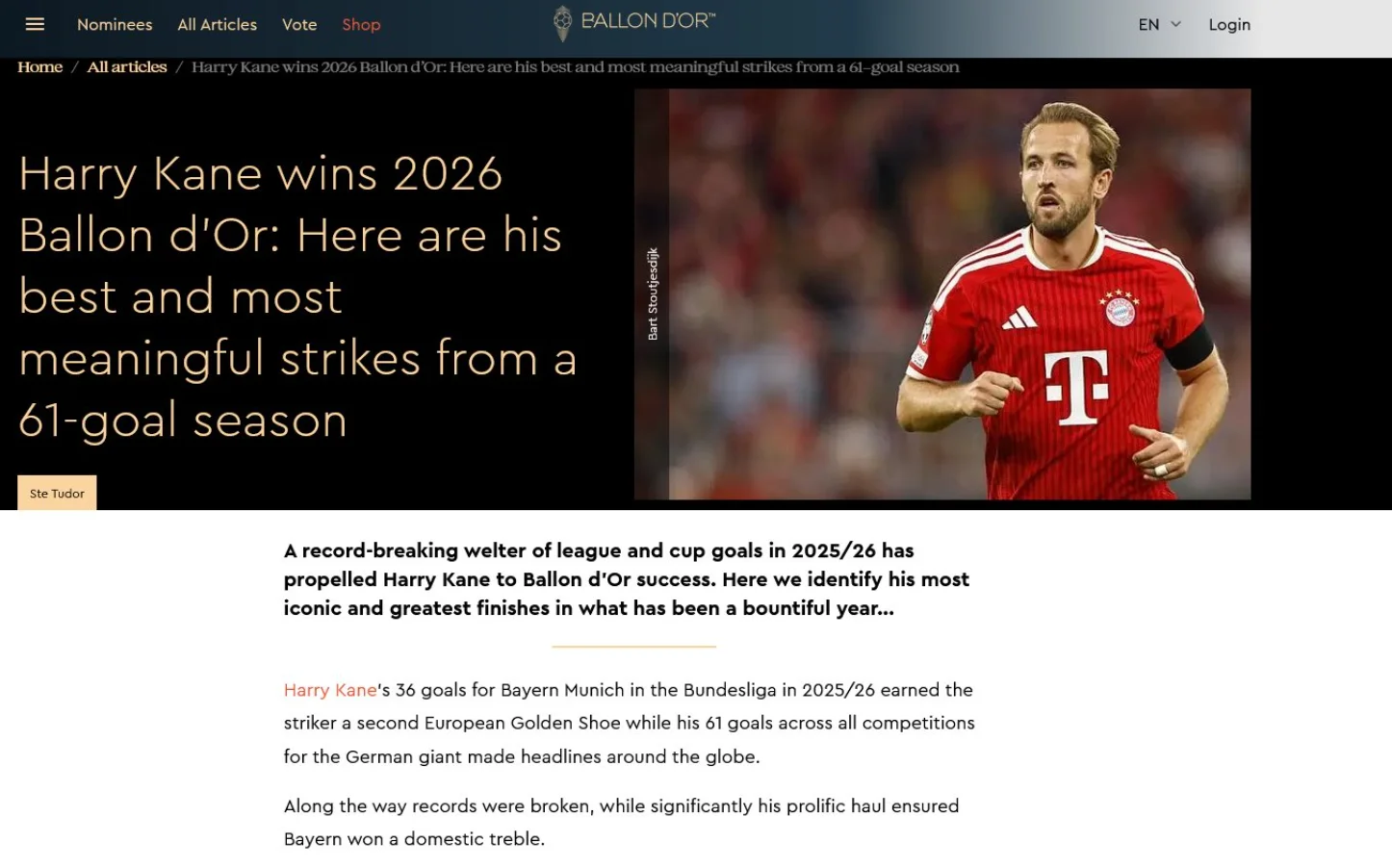
Kane’s profile was titled “Harry Kane wins 2026 Ballon d’Or: Here are his best and most meaningful strikes from a 61-goal season”. It praised his scoring record and said his goals had helped Bayern secure a domestic treble. That is the sort of retrospective framing that makes sense after an award has been decided: it links an individual’s numbers to a team achievement and presents the season as a case for recognition. The discrepancy between the profile’s 61-goal headline and the article’s earlier reference to 89 goals also shows why a prematurely published page can invite questions beyond the identity of the winner.
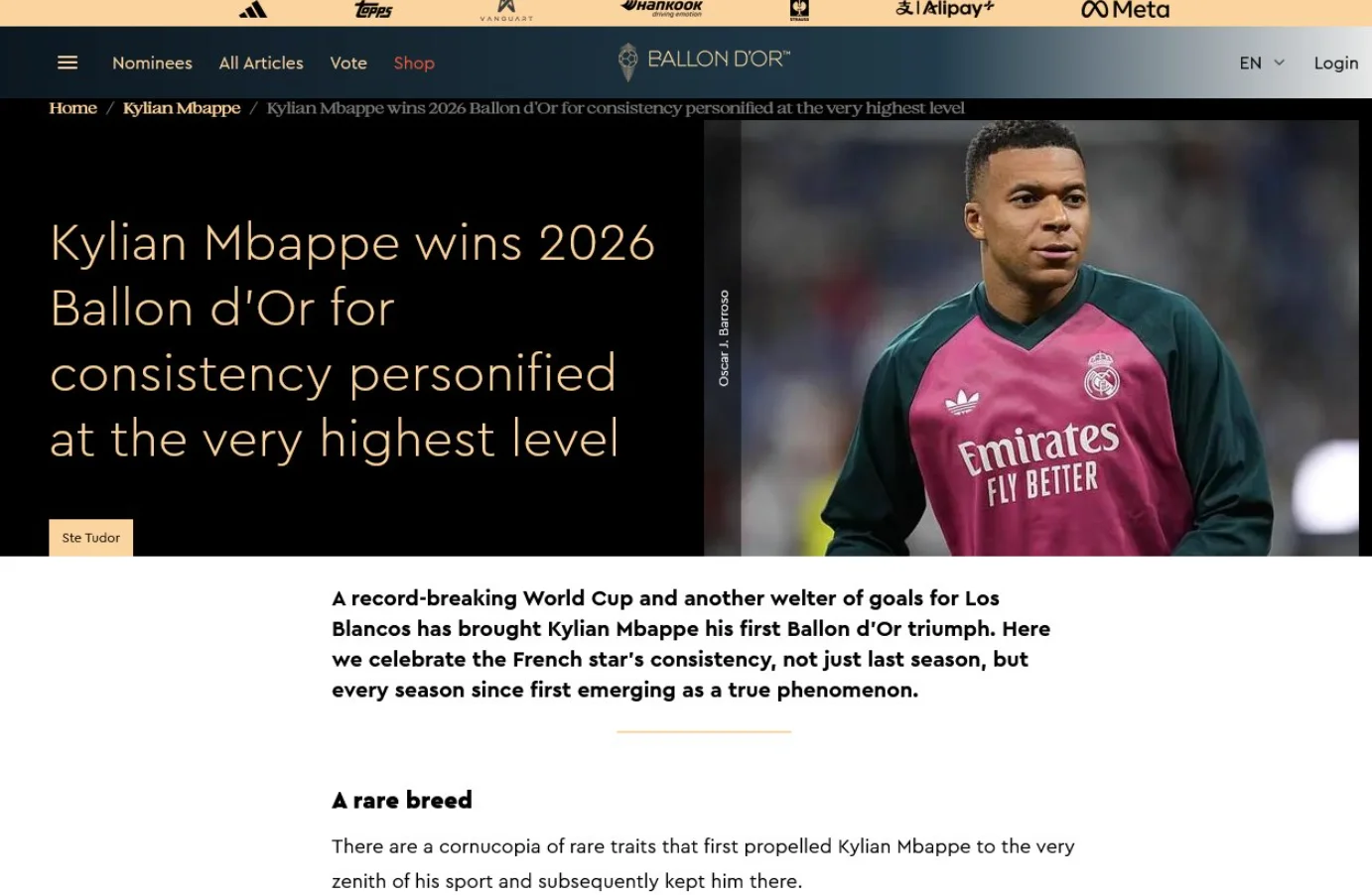
Mbappé’s draft framed him as “consistency personified at the very highest level”, citing a record-breaking World Cup and his goals for Real Madrid. The phrase casts his case around sustained performance and a major international achievement, rather than a single statistic. As with Kane’s page, the profile was written to make a winner’s argument for its subject. That editorial confidence is precisely what made the pages look like more than routine drafts once they appeared online.
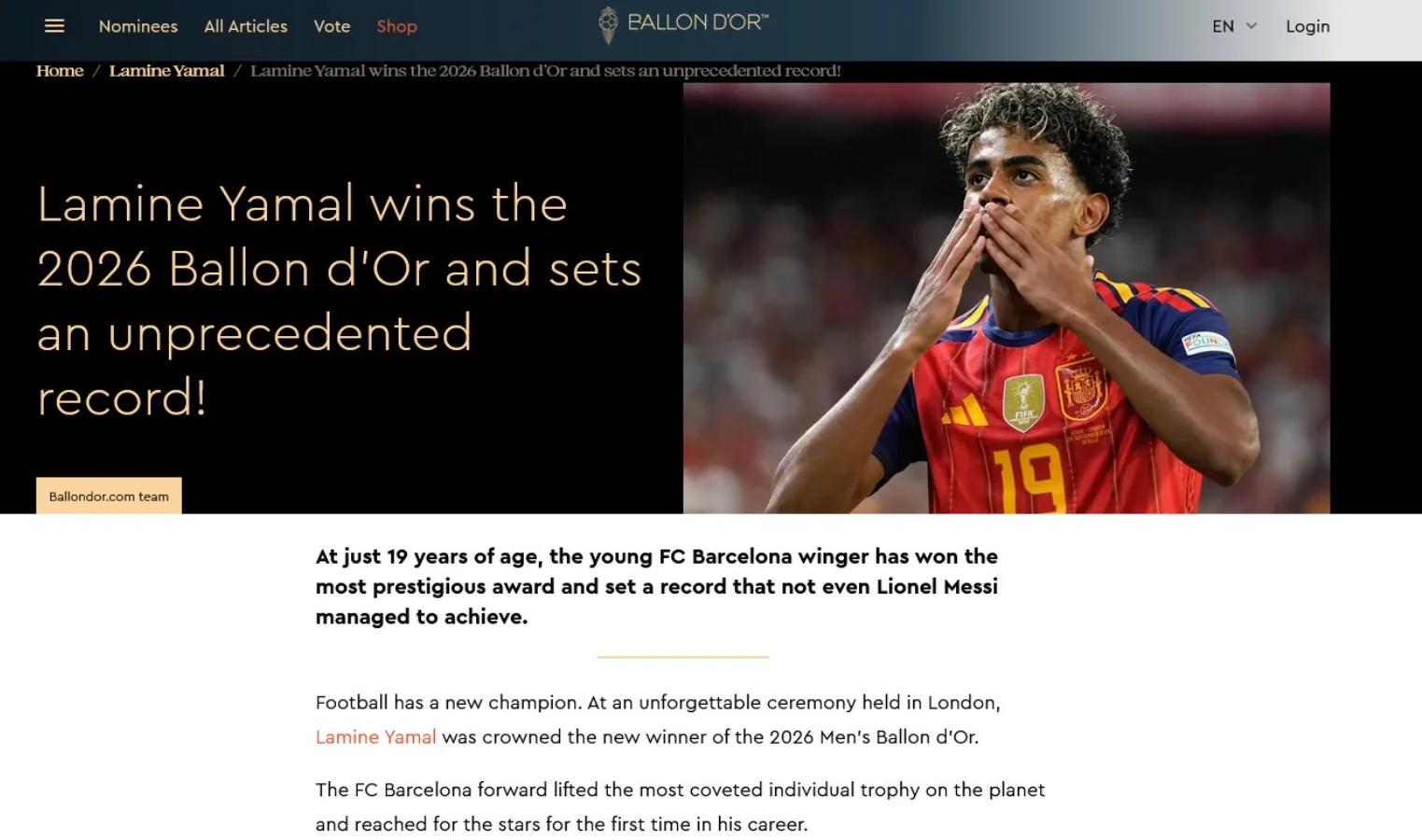
Yamal’s profile called him the “new king of football” and said the 19-year-old had become the youngest Ballon d’Or winner since the award began in 1956. It contrasted his supposed achievement with Lionel Messi, who first won at 22 years and 160 days, and Ronaldo Nazário, the previous youngest winner at 21 years and 92 days. Those comparisons made the claim especially concrete: the page didn’t just predict a win, but described a record that depended on the result being real. A prepared profile can contain that kind of detail, but until the ceremony confirms it, the claim remains an unverified scenario.
What the error means for readers
Here’s the thing: three polished profiles can create the impression of a leak even when they’re simply prepared drafts. The organisers’ statement denied that the pages disclosed the podium, leaving the ceremony to determine which contender, if any, matched the published claims. This is more significant than it looks because an official site carries the authority of the event, and a confident headline can travel farther than a later correction.
For readers, the useful distinction is between evidence of publication and evidence of a result. The pages were published, then removed; the organisers said they had been prepared for every nominee and did not reveal the podium. Those facts support the explanation that the site exposed drafts, but they don’t establish who won. If you're working in sports publishing, the episode is a reminder that scheduled content can become news in its own right when it escapes before its intended moment (and this is the part most people overlook). The ceremony still had to supply the answer.
And yet. A short-lived mistake can leave a longer question about how winner-specific material was handled and checked before publication. The available information doesn’t show whether the pages were exposed through a scheduling error, a technical issue or another process, so assigning a cause would be guesswork. For now, the strongest reading is also the narrowest: the Ballon d’Or said the drafts covered all nominees, and the pages alone don’t prove a winner.