Lamine Yamal’s latest Golden Boy win came with an unusual footnote: the Barcelona forward said teammate Pau Cubarsí should have received the award instead. The comment offered a generous counterpoint to a season in which Yamal’s numbers and Spain’s World Cup success put him among the leading contenders for football’s top individual honours. It also shifted attention from the familiar story of a young star collecting another prize to a less common question: how much weight should a winner give to a teammate’s claim?
Yamal, 19, was in contention for the Ballon d’Or after helping Spain win the World Cup in the summer. He became the youngest player to appear in and win both a European Championship final and a World Cup final. For Barcelona, he recorded 24 goals and 18 assists across all competitions during another LaLiga-winning campaign. Those achievements make his case for individual recognition easy to understand, even if awards inevitably compress a team season into a contest between individual names.
He has carried that form into the new season, contributing to 20 goals in 13 appearances as Barcelona won their first nine league matches and moved clear at the top of the table. That start gives the club an early advantage, but it doesn’t settle questions about how long Yamal can sustain his output or how much of Barcelona’s success can be credited to any one player. A strong run is evidence of form, not a guarantee of what comes next.
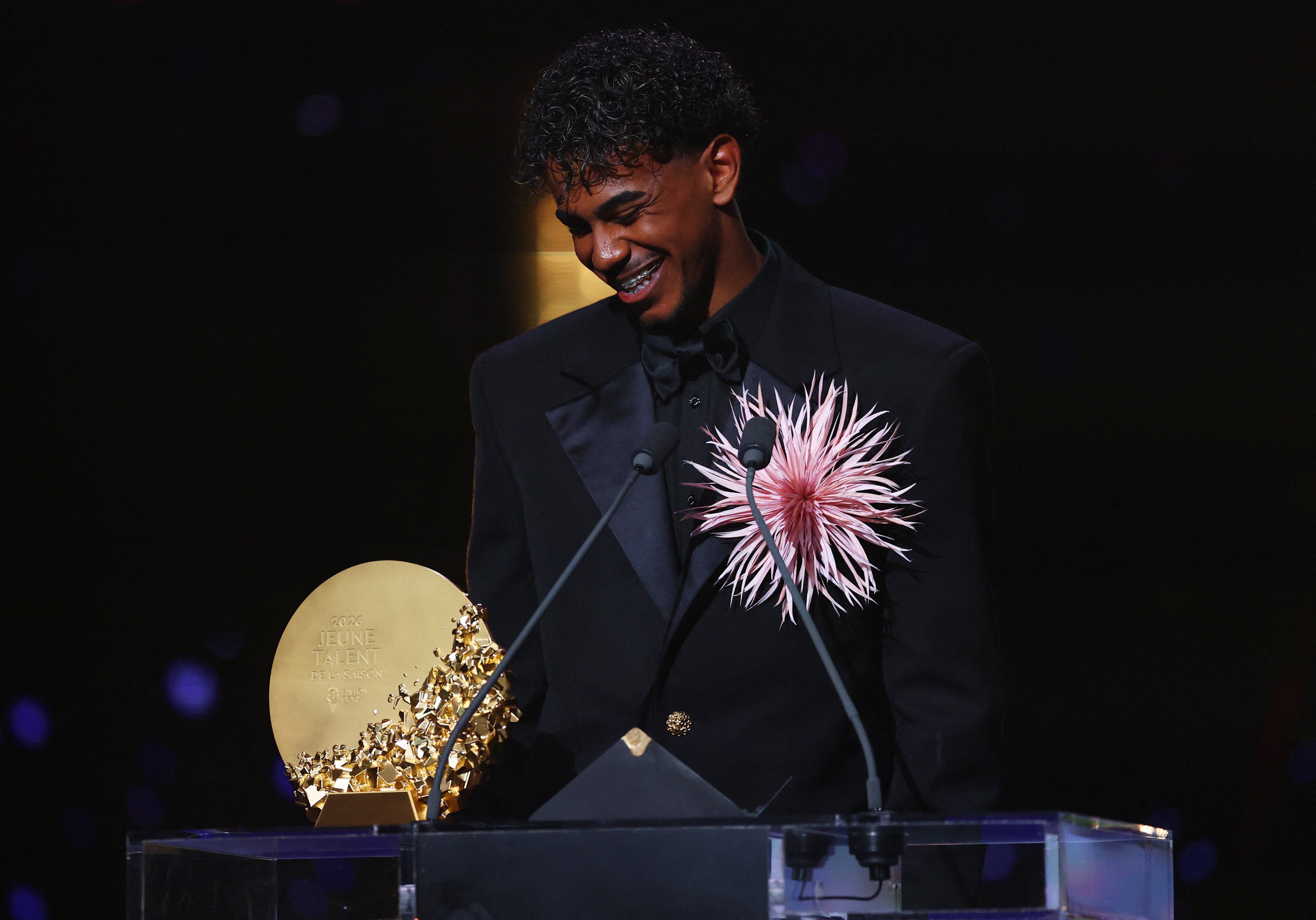
A second Golden Boy, and a near double
The Golden Boy recognises the year’s best young player. Yamal first won it in 2024 after Spain’s Euro 2024 triumph, and this year’s award gave him another chance to join Lionel Messi as a player to claim both the Golden Boy and Ballon d’Or on the same night. Repeating the young-player honour puts his latest season alongside an earlier milestone, while the prospect of winning both awards offered a bigger individual distinction.
Harry Kane, the Bayern Munich and England striker, took the Ballon d’Or instead. Yamal had finished runner-up in the previous year’s vote, but this time the two prizes went to different players. The split is a useful reminder that these awards measure different things: the Golden Boy focuses on young talent, while the Ballon d’Or places players from across the game in a single contest. A win in one doesn’t automatically predict a win in the other.
On stage to accept the young-player award, Yamal praised Cubarsí, who had been named the World Cup’s young player of the tournament. That recognition gives context to Yamal’s remarks: he wasn’t simply offering a generic thank-you to a teammate, but pointing to another young player whose tournament performance had already earned its own distinction. Whether Cubarsí should have won the Golden Boy is a matter for the voters; Yamal’s intervention made clear that he believed his teammate had a strong case.
“It’s an honour to be here and to receive this prize,” Yamal said. “I would like Cubarsi my team-mate to be here because I think this prize should have been for him, he deserved it. He’s been playing at a top level for some time and I wish he had won it.”
He also thanked Barcelona, Spain and those around him, adding: “I will continue working to win these collective and individual prizes.” The statement is direct about ambition, but it places team achievement alongside personal awards. That balance matters in a sport where an individual honour can draw attention away from the work of teammates who create space, defend leads or turn promising attacks into goals.
What the award says about Barcelona’s next challenge
Yamal’s praise for Cubarsí doesn’t diminish his own season. If anything, it makes the ceremony more revealing: the player receiving the award chose to name a teammate as its deserving recipient, while still making clear that he intends to pursue more honours. That’s a generous gesture, and a notable one in an awards culture built around ranking individual achievement.
Here’s the thing: personal prizes can recognize form, but they can’t carry a club through a season. Barcelona’s league start and Yamal’s contribution to 20 goals in 13 appearances are encouraging, yet the longer measure will be whether the team keeps winning as opponents adjust and the schedule progresses. This is more significant than it looks. A young player’s growing reputation raises expectations for both his performances and his role in a team that has started strongly.
For Cubarsí, Yamal’s endorsement adds public support to a case already backed by his World Cup young-player award. It doesn’t change the Golden Boy result, and there’s no evidence in the source to suggest it will alter future voting. Still, praise from a teammate who has just won the prize is a reminder that awards can’t capture every view inside a squad. The work behind a trophy is shared.
If you’re following Barcelona, the question now is how the club turns early momentum into lasting success while its young players continue to develop. That won’t be answered by one ceremony or one stretch of form. Yamal’s season has put him in the conversation for football’s biggest prizes; his next challenge is turning that standing into another year of team success and individual recognition. And yet, his own words suggest he sees those ambitions as connected to the people around him. Not a solo act.