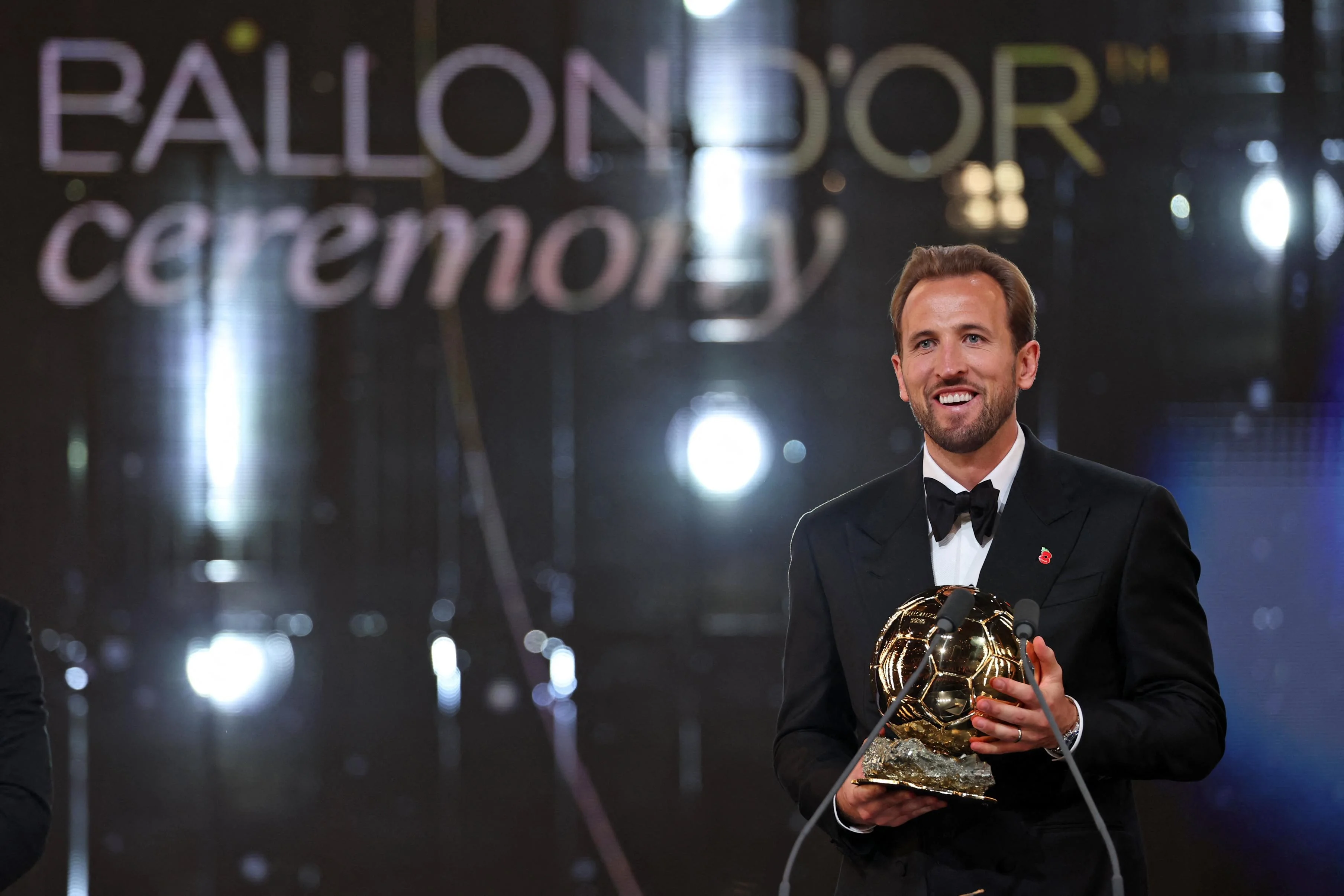
Harry Kane’s 2026 Ballon d’Or win gives Bayern Munich its first recipient in 45 years and makes him the first English winner since Michael Owen in 2001. The 33-year-old striker finished ahead of Kylian Mbappé and Lamine Yamal after a standout season for club and country.
What the result says about Kane’s season
The award places Kane at the top of a field that included two of the most prominent names in the current generation, Mbappé and Yamal. That distinction matters because the Ballon d’Or is an individual prize awarded within a team sport: a striker’s goals can define a season, but voters also weigh the broader impression of a player’s contribution and the strength of the campaign around him. The source describes Kane’s season for club and country as standout, though it doesn’t provide the statistics or match details behind that judgment.
For Bayern, the result ends a long wait for another winner. Karl-Heinz Rummenigge’s 1981 award was the club’s previous Ballon d’Or, so Kane’s victory links two players separated by decades of football. It’s a striking marker of individual recognition at a club whose identity is built around collective success. This is more significant than it looks: the gap means Bayern’s latest win isn’t simply another addition to a recent run of awards.
An English winner after a long interval
Kane is the first English player to win since Michael Owen in 2001. That interval gives the national milestone weight, while also underscoring that the award follows individual achievement rather than nationality or reputation. Kane’s victory doesn’t establish a wider trend by itself; it marks one player’s rise above a competitive group in a particular season.
The comparison with Owen is a useful point of reference, but the source offers no basis for drawing a direct parallel between their careers or the football around them. The shared fact is the distinction itself: each became the latest English name on a list with few entries. For readers following the award, that makes Kane’s win both a personal honor and a rare national milestone.
Kane’s acceptance speech
Kane opened by saying he was “almost speechless,” then thanked the award’s organisers and voters. As captured by X account @iMiaSanMia, he said London’s role as host made the evening especially meaningful to him, calling it “a good omen.” The comment gives the ceremony a personal dimension: the setting mattered to him, even as the award recognised performances across club and country.
He also said he was delighted to be recognised alongside the other nominees, including teammates and “truly world-class players” in the room. That phrasing reflects the two sides of an individual award: one player receives the honor, while the ceremony also places that achievement among the work of peers. Kane’s remarks were brief in the source, but they frame the win as recognition within a strong field rather than a claim that football is a solitary pursuit.
What the win means for Bayern
The result gives Bayern a new Ballon d’Or holder for the first time since Rummenigge won in 1981. Individual awards can become shorthand for a season, but they don’t tell the whole story of a club’s performance. Here, the available account identifies Kane’s success for club and country without laying out the team results or the moments that shaped the voting.
That said, the club record is clear. Bayern can present Kane’s win as a continuation of its history of producing or attracting players whose work earns individual recognition, while the long interval makes the latest award stand out. If you're working in this space, the distinction is a reminder that major honors carry both a sporting meaning and a memory function: they connect a present-day campaign to earlier figures in a club’s history.
Why the result will be watched
The ranking places Kane ahead of Mbappé and Yamal, but the source doesn’t include voting totals or explain how close the result was. That limits what can be said about the voters’ priorities. The award confirms the outcome; it doesn’t, on its own, reveal which parts of Kane’s season proved decisive.
And yet, the result gives supporters a clear point of reference for discussing the season: Kane won, two high-profile nominees finished behind him, and the prize carries rare significance for both Bayern and England. The detail most people may overlook is how much the ceremony’s setting shaped Kane’s own account of the night. (and this is the part most people overlook) London’s role as host made the occasion feel personally meaningful to him, even as the award’s significance reaches well beyond the room.
A milestone. The win joins a long-running club record to an uncommon national achievement, while leaving open the question of which performances persuaded voters. For now, the facts available are enough to establish the result’s place in Bayern and English football history.
Implications and what comes next
Kane’s award will shape how this season is remembered, though it can’t settle every debate about who had the strongest year. Ballon d’Or voting compresses a complicated campaign into a ranking, and the final order naturally invites discussion about the standards voters applied. Without further detail on ballots or performances, claims about the decisive factor would be guesswork.
For Bayern, the immediate significance is historical: the club has another winner after a 45-year gap. For English football, Kane becomes the first winner since Owen. What this means for you as a reader is straightforward: this is a rare individual milestone, not evidence by itself of a lasting shift in the game. Similar award outcomes often become reference points for later comparisons, but the lasting assessment will depend on how Kane’s season is discussed alongside the achievements of his peers.
Join the conversation!
Sign up for a user account and get:
- New, improved notifications system!
- Fewer ads
- Create community posts
- Comment on articles, community posts
- Rec comments, community posts