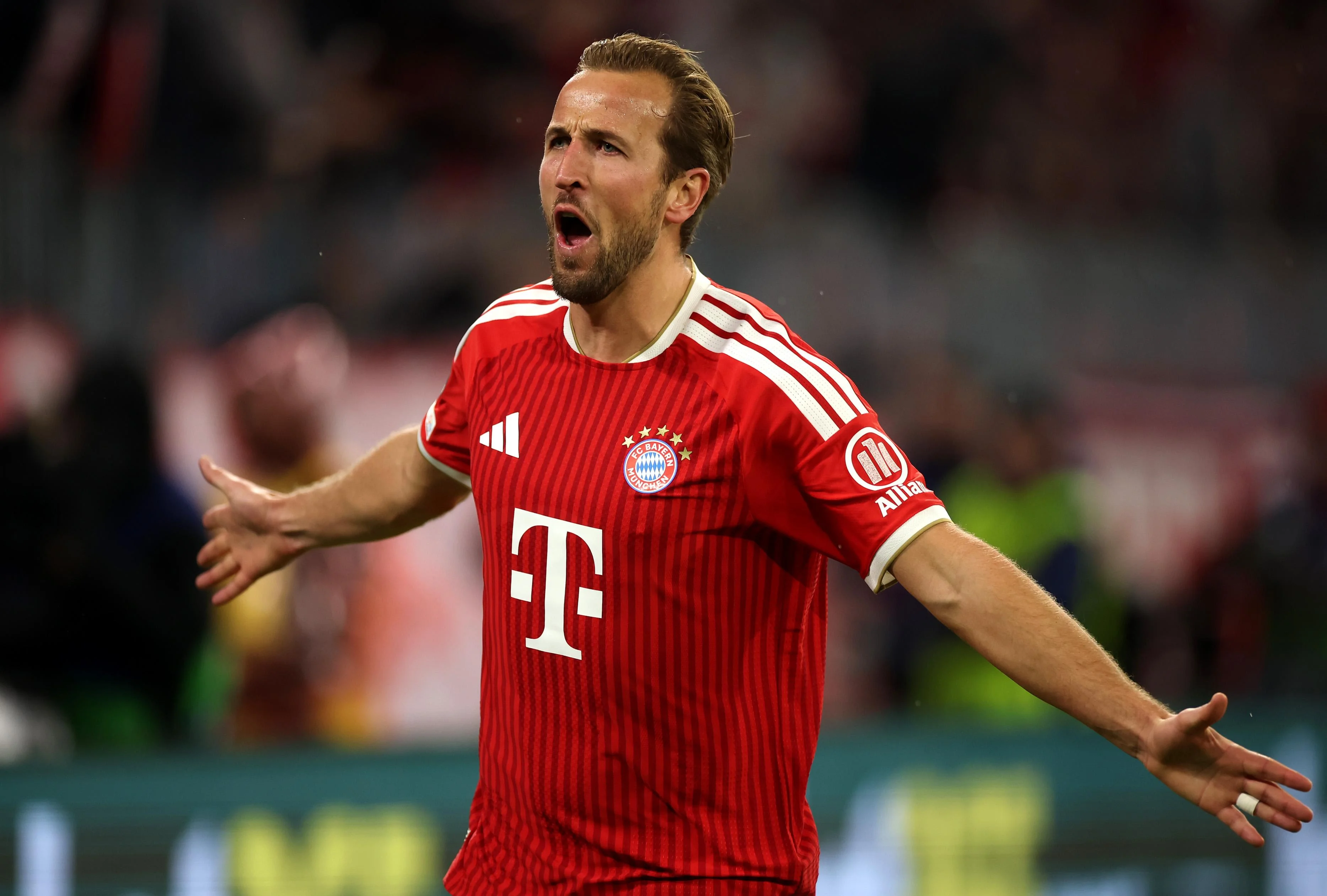
Harry Kane’s Men’s Striker of the Year award at the Ballon d’Or ceremony adds individual recognition to a season he described as the best of his career. For Bayern Munich, it also reflects the England captain’s central role in the team’s attack and his sustained output in front of goal. The award gives a formal marker to a season whose value, in Kane’s own account, rests on more than personal statistics. He pointed to the players and coaches around him, while Bayern can take the honor as recognition of how much its attack depends on his finishing.
A season built with others
Kane credited teammates at Bayern and with England, along with his coaches, for helping him reach the milestone. His comments frame goalscoring as the visible end of a process involving service, movement and preparation: a striker may complete the move, but other players often create the conditions for it. He also tied the outcome to his own work in training and matches, acknowledging that collective support and individual effort operate together.
“It has truly been a magical year. What I’ve achieved has really meant a lot to me, and I’m extremely proud of it. Without a doubt, this has been the best season of my career, and none of it would ever have been possible without all the people around me. Obviously, my teammates, both at my club and with the England national team, and of course, my coaches. I would never have been able to score all these goals without my teammates, or without giving everything in training and during matches,” Kane said (as captured by @iMiaSanMia).
He also thanked his family and his wife, Kate, who was at the ceremony. Kane said their support and the wider team around him help keep him grounded, adding that he and his wife are on the journey together. That detail broadens the picture of an individual honor: the public recognition arrives at the ceremony, but the support he described extends beyond the team and the work on the pitch.
What the award says about Kane’s role
The award recognizes a standout season, but Kane’s remarks put the emphasis on collective effort. That balance matters for Bayern because a striker’s influence can’t be measured only by the final touch; a team also needs patterns of play and teammates capable of supplying chances. Kane’s comments don’t explain the mechanics of Bayern’s attack, but they do make clear that he sees his scoring record as shared work. This is more significant than it looks: individual awards tend to isolate a player, while his account keeps the supporting cast in view.
For England, his reference to the national team makes the same point across a different setting. Club and country ask for different combinations of players and coaching, yet Kane credits both environments in describing the season. If you’re following his form, the award is a useful marker of recognition, but it doesn’t by itself answer how consistently he can reproduce that output or what tactical conditions helped produce it. The distinction between a season’s achievement and the next season’s task is easy to blur. A trophy records what has happened; it doesn’t guarantee what comes next.
The next test
Kane’s next challenge is to carry that form into another campaign for Bayern and England. Here’s the thing: sustained scoring depends on more than the striker, and his own account points directly to that dependence. Teammates must continue to create opportunities, coaches must shape the approach, and Kane must keep delivering the work he described in training and matches. No single award can settle whether all those pieces will align again.
And this is the part most people overlook: Kane’s gratitude is also a reminder that the headline performance sits inside a wider team effort. The recognition belongs to him, but his explanation of it resists the idea that goals arrive in isolation. A strong season, then a new test.
Join the conversation!
Sign up for a user account and get:
- New, improved notifications system!
- Fewer ads
- Create community posts
- Comment on articles, community posts
- Rec comments, community posts